
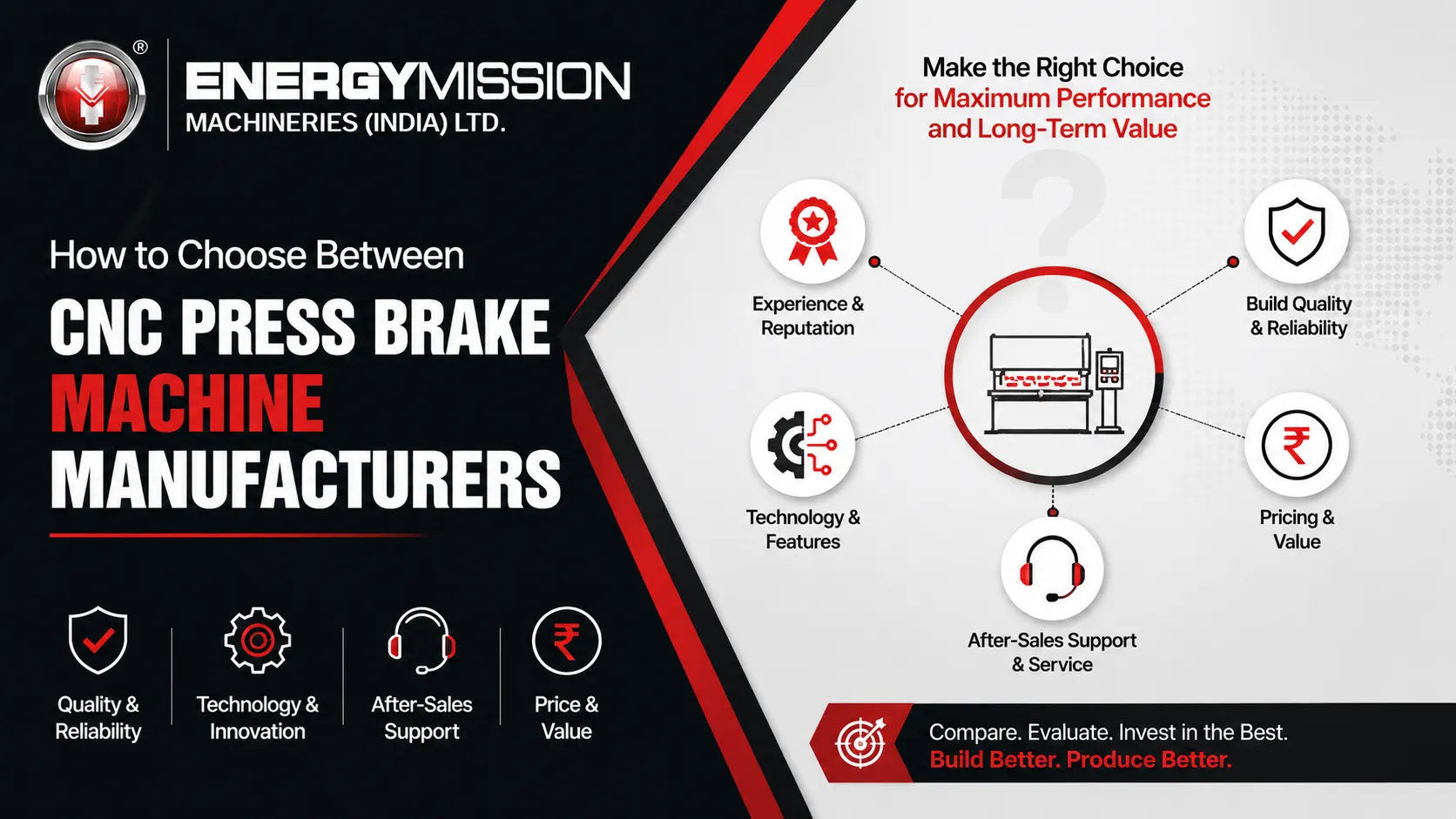
Sourcing high-performance manufacturing machinery is one of the most high-stakes capital decisions an engineering firm or fabrication workshop will make. If you select an unverified manufacturer based purely on the lowest price, your shop floor faces severe long-term consequences. You will likely contend with premature frame deflection under full loads, persistent hydraulic synchronization errors, and inconsistent bend angles that spike your material scrap rates.
When evaluating global cnc press brake machine manufacturers, the challenge isn’t just finding a company that can build an iron frame. The goal is discovering an engineering partner capable of delivering structural rigidity, micron-level backgauge repeatability, and robust long-term technical consultation. A breakdown on your bending line stalls your entire assembly workflow, halting your delivery schedules and hurting customer relationships.
In this dedicated industrial sourcing guide, we translate more than 15 years of sheet metal engineering experience into actionable procurement advice. You will learn how to evaluate international machine builders, discover why working with established cnc press brake machine suppliers in India maximizes long-term return on investment (ROI), and learn the essential diagnostic questions to ask before signing any procurement contract.
Evaluating Global CNC Press Brake Machine Manufacturers
Industrial procurement teams often search globally when sourcing complex sheet metal machinery. While selecting entry-level, unbranded imported machinery might look attractive on a preliminary balance sheet, experienced production managers know that initial savings can disappear rapidly due to hidden maintenance costs and operational limits.
When you look into global cnc press brake machine manufacturers, you must evaluate their core engineering principles and structural standards. A high-quality press brake needs to withstand hundreds of tons of concentrated force millions of times without its frame losing alignment. Low-tier manufacturers cut costs by reducing overall steel plate thickness and using faster, cheap welding methods while skipping thermal stress-relieving processes entirely.
Furthermore, component origin plays a vital role. High-end global builders rely on open-architecture systems, sourcing components like Rexroth or Hoerbiger proportional hydraulic valves, Heidenhain or Givi linear encoders, and premium controllers from Delem, ESA, or Cybelec.
If a manufacturer cannot provide a transparent, brand-verified bill of materials, you are likely looking at proprietary, low-grade components that will be incredibly difficult to fix or replace when a breakdown occurs.
Why Partner with Certified CNC Press Brake Machine Suppliers in India
India has developed into a major global hub for top-tier sheet metal machinery manufacturing. Indian machine tool builders combine robust European engineering standards with localized support networks and flexible design options. Partnering with certified cnc press brake machine suppliers in India provides distinct strategic advantages for modern workshops.
The Major Structural Benefits Include:
- Advanced In-House Production Capacities: Top Indian manufacturers do not simply assemble outsourced components. They invest in massive portal milling machines to handle their structural steel frames in-house. This ensures that the bed, ram, and side housings remain perfectly parallel under extreme operational pressure.
- Effortless Component Availability: Leading suppliers prioritize global component standards. By building machinery equipped with easily sourced electrical parts and standard hydraulic components, you can easily find routine maintenance elements locally rather than waiting weeks for international custom shipments.
- Direct Access to Factory Engineers: Language barriers and massive time zone differences often complicate support when working with overseas brokers. Indian manufacturers provide direct communication channels with application engineers who understand the practical realities of industrial shop floors.
Choosing an established domestic manufacturer means you are securing an engineering partnership focused on maximizing machine uptime and helping your workshop operate efficiently for decades.
How to Choose the Right Machine: Commercial & Technical Investigation
Selecting the ideal press brake requires matching your real-world part portfolio against the specific mechanical limits of the machine tool. Before finalizing your technical specifications with cnc press brake machine manufacturers, run through these five essential procurement metrics with your production team:
1. Real-World Tonnage and Bending Length Requirements
Calculate your absolute maximum required force using reliable sheet metal tonnage charts, taking into account the highest material tensile strengths you plan to handle. For example, bending thick stainless steel requires roughly 50% more pressure than processing standard mild steel of equal thickness.
- Safety Protocol: Never purchase a machine that will operate at 100% capacity during normal production shifts. Secure a 20% safety margin to protect your hydraulic seals and prevent premature frame fatigue. Ensure the bed length provides ample room to clear your widest components between the vertical housings.
2. Number of Automated Controlling Axes
The complexity of your parts determines the configuration of the machine’s axes. A basic 3-axis system manages the downward ram depth (Y1, Y2) and the backgauge depth (X). For more complex, multi-stage bending jobs, you will want to look into additional axes:
- R-Axis: Automated vertical movement of the backgauge fingers to handle varying flange offsets.
- Z1, Z2 Axes: Motorized lateral spacing of the backgauge fingers across the machine width, reducing manual setup times.
3. Precision Crowning Systems
When the tool presses into the metal, both the upper ram and the lower bed naturally flex away from each other at the center. Without mechanical correction, this causes a “boating defect” where the outer flanges bend to 90 degrees while the center section stays wide open at 92 or 93 degrees.
- To ensure consistent results across the entire sheet length, look for a machine equipped with a dynamic, automatic CNC hydraulic or mechanical wedge crowning system.
4. Operational Volume and Technical Skill Levels
If your workshop handles high-volume production with tight deadlines, look for high-speed servo-hydraulic configurations that offer fast approach and return speeds. For job shops running variable, low-volume batches, focus on intuitive touchscreen controllers that allow operators to import 2D or 3D DXF files, automatically calculating proper bend sequences to cut down setup times.
Technical Comparison for Machine Sourcing
To help your procurement team make an informed long-term decision, you must evaluate the operational value of different press brake design setups.
Here is a technical comparison comparing conventional NC machines, standard CNC Synchro press brakes, and modern high-efficiency Servo-Hydraulic systems:
|
Technical Feature |
NC Torsion Bar Press Brakes |
CNC Synchro Hydraulic Press Brakes |
High-Efficiency Servo-Hydraulic CNC |
|
Ram Synchronization Method |
Mechanical: Uses a heavy mechanical torsion bar to link both cylinders physically. |
Electronic: Utilizes dual linear scales and proportional hydraulic valves for real-time adjustments. |
Electro-Hydraulic: Employs independent servo-motor driven pumps per cylinder for precise control. |
|
Angular Precision & Repeatability |
Moderate: Prone to variations as oil temperatures rise during long shifts. |
High: Maintains consistent accuracy within $\pm 0.01\text{mm}$ regardless of thermal variations. |
Ultra-Precision: Delivers exceptional precision within $\pm 0.005\text{mm}$ for high-tolerance work. |
|
Energy Consumption Profile |
High: The main motor runs continuously at full speed, drawing power even when idling. |
Moderate: Proportional valving optimizes hydraulic pressure during the active cycle phase. |
Excellent: Energy usage drops up to 60% as servo pumps stop completely when the ram idles. |
|
Complex Multi-Axis Expansion |
Limited: Typically confined to basic X and Y axis control options. |
Excellent: Easily handles advanced configurations from 3-axis up to 8+ axis systems. |
Maximum Integration: Designed for high-speed robotic cell integration and full automation. |
|
Long-Term Asset Value |
Low: Best suited for low-tolerance, straightforward job shop tasks. |
High: The primary workhorse for standard, versatile industrial fabrication lines. |
Premium: Maximizes long-term ROI for high-precision, round-the-clock production. |
Key Questions to Ask Sourcing Agents Before Purchasing
When dealing with third-party machinery distributors or sourcing brokers, look beyond high-level sales brochures. Use these targeted, technical diagnostic questions to verify the structural quality of the equipment:
- What specific thermal stress-relief process does the machine frame undergo after welding? If the agent cannot describe the thermal baking or vibratory stress-relieving process, the frame may warp over time, leading to regular angular drift.
- Is the crowning system managed dynamically by the CNC controller, or does it require manual operator intervention? Automated crowning ensures the controller calculates and updates bed deflection corrections dynamically for every individual step in a program sequence.
- What specific service SLA do you guarantee for field maintenance, and where are replacement parts stocked? Ensure you establish a clear contract layout regarding exactly how fast a service technician can arrive at your facility with real replacement parts during an unexpected breakdown.
- Can the controller accept direct offline 3D CAD programming files from our design engineering department? Sourcing a machine with offline programming support allows your design office to prepare complex bending programs without stopping the machine, keeping the shop floor active.
Industry FAQ
What is the difference between an NC manufacturer and a true CNC press brake manufacturer?
An NC manufacturer typically builds machines that rely on a mechanical torsion bar to link ram movement, using simpler controllers that require operators to program numeric dimensions manually. A true CNC press brake machine manufacturer designs advanced electro-hydraulic systems featuring independent cylinder control via linear scales, proportional valves, automatic crowning, and graphical programming interfaces.
Why do some identical-looking press brakes have vast differences in pricing?
The cost difference is driven by internal material quality and build standards. Premium machines utilize heavy, stress-relieved steel plates, high-end linear guides, precise ground tooling, and globally recognized hydraulic valves. Cheaper alternatives use thinner steel, generic components, and simplified machining processes that wear down much faster under heavy industrial use. For more details, explore our analysis on why press brakes with identical specs perform differently.
What is the operational lifespan of a premium Indian-manufactured press brake?
When a high-quality machine is maintained correctly, it will easily deliver high-precision performance for 15 to 20 years of active double-shift factory service. Achieving this longevity requires changing hydraulic oil regularly, keeping the linear guides clean and lubricated, and operating within the rated tonnage limits.
Can a CNC press brake automatically compensate for sheet metal thickness variations?
Advanced CNC controllers can adjust for minor variations if the machine is equipped with real-time thickness measurement or active angle tracking sensors. Standard CNC systems don’t measure the sheet directly, but they allow operators to tweak the Y-axis depth value quickly to manage slight variations between different material batches.
Why is an electro-hydraulic synchro machine better than a mechanical torsion bar design?
Mechanical torsion bar systems wear down over time, leading to parallel alignment errors across the beam. An electro-hydraulic synchro machine monitors ram position constantly using precise linear scales. It adjusts hydraulic pressure instantly to keep the beam parallel, even during off-center loading jobs. Learn more by reading our guide comparing CNC vs Hydraulic Press Brakes.
How do I check the quality of a press brake before it leaves the factory floor?
Always request a comprehensive pre-shipment inspection report from the manufacturer. This documentation should outline complete structural alignment metrics, full-load tonnage testing, backgauge positioning accuracy checks, and multiple trial bends on your specific material profiles. You can learn what parameters to evaluate in our expert guide on checking press brake factory quality reports.
Featured Snippet Optimization
How do you choose a CNC press brake machine manufacturer?
Choose a CNC press brake manufacturer by validating their structural engineering quality. Prioritize companies that utilize heavy, thermally stress-relieved steel frames, integrate globally recognized hydraulic valves and linear scales, offer dynamic CNC crowning systems, and provide a proven local service network for fast technical support.
Key Takeaways for Industrial Sourcing Teams
- Prioritize Structural Quality: Never sacrifice frame weight or stress-relieving quality for a lower initial price tag; structural integrity dictates your long-term precision.
- Insist on Premium Component Standards: Verify that the machine uses globally recognized, branded hydraulic components and electrical controls to ensure easy maintenance down the line.
- Secure Tonnage Safety Room: Size your machine with at least 20% extra capacity headroom to protect internal hydraulic components from premature wear.
- Invest in Smart Controls: Select controllers that offer automatic crowning adjustments and offline CAD programming to optimize shop floor productivity.
- Partner for the Long Term: Choose a certified manufacturer that provides direct communication with factory engineers, comprehensive warranties, and rapid spare parts access.
Secure Your Production Future with Energy Mission
Maximizing your shop floor’s long-term output requires heavy machinery built to deliver absolute precision under demanding schedules. At Energy Mission Machineries (India) Ltd., we bring over 25 years of design and manufacturing experience directly to your business. We engineer high-performance industrial equipment built to solve real-world production challenges.
Our diverse manufacturing portfolio features premium CNC Press Brakes, dependable Hydraulic Press Brake Machines, high-precision CNC Shearing Machines, robust Plate Rolling Machines, versatile Ironworkers, and advanced Busbar Processing systems. We proudly support and export to expanding fabrication networks across India, the UAE, Saudi Arabia, Oman, Qatar, Kuwait, Bahrain, Africa, and other international markets.
From initial workflow analysis and custom axis configuration to dedicated factory testing and fast on-site service support, our engineering team is focused on helping your facility stay productive.