
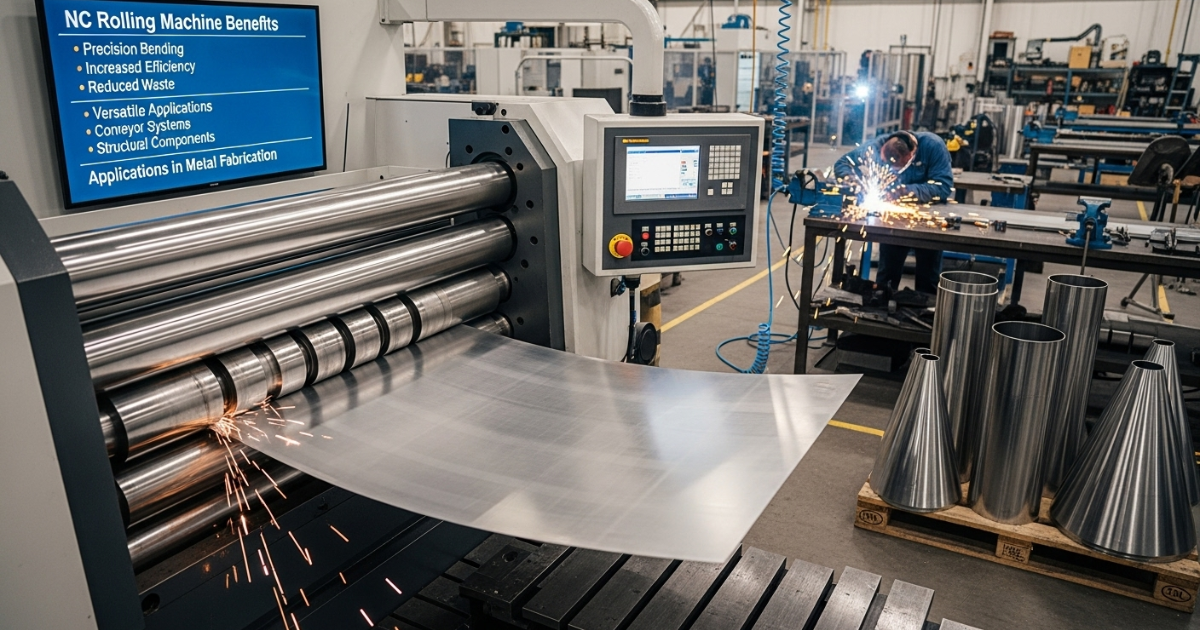
Importance of NC Rolling Machines in Metal Fabrication
Metal fabrication is one of the most vital pillars of modern industry. From building infrastructure and automobiles to manufacturing heavy machinery and consumer goods, the demand for precise and efficient forming processes has grown significantly. Among the machines that drive this sector, the nc rolling machine holds an important place.
Equipped with numerical control, this machine allows manufacturers to roll sheets and plates with accuracy, consistency, and speed. Despite the rise of advanced CNC systems, NC machines remain highly popular because they balance automation with affordability. In this blog, we will explore the benefits, features, and applications of NC rolling machines, and understand why they remain essential in the world of sheet metal fabrication.
What is an NC Rolling Machine
An NC (Numerical Control) rolling machine is a sheet rolling machine designed to bend and roll metal sheets into desired shapes such as cylinders, cones, and curved surfaces. It works through programmable control, where operators can set parameters like:
- Bending radius
- Rolling length
- Material thickness
- Number of passes
Once programmed, the machine performs the rolling process with consistent precision, minimizing manual adjustments. This makes it especially valuable in medium-scale production where repeatability and efficiency are crucial.
Working Principle of NC Rolling Machines
The machine operates on a simple yet effective principle:
- Material Placement – A metal plate or sheet is positioned between rollers.
- Roller Adjustment – The rollers, driven by hydraulic or mechanical systems, adjust to apply pressure.
- Controlled Movement – The NC system sets the rolling distance, angle, and pressure.
- Bending and Rolling – The sheet bends as it passes through the rollers, forming into cylindrical or conical shapes.
- Repeat Accuracy – The programmed cycle ensures each piece comes out with the same dimensions.
This combination of metal forming machine technology with numerical control makes NC rolling machines both efficient and reliable.
Benefits of NC Rolling Machines
1. High Precision
Accuracy is a major advantage. With programmable controls, manufacturers can achieve uniform bending angles and rolling radii across multiple sheets.
2. Cost-Effective Automation
Unlike fully automated CNC machines, NC versions offer semi-automation at a more affordable investment. This makes them ideal for small and medium fabrication units.
3. Flexibility in Material Handling
From mild steel and stainless steel to aluminum, an nc rolling machine can handle a wide variety of materials and thicknesses.
4. Improved Productivity
The ability to repeat processes quickly saves time and ensures faster output compared to manual rolling.
5. Durability and Strength
Built with robust structures and heavy-duty rollers, these machines are capable of withstanding long hours of industrial operations.
Applications of NC Rolling Machines in Metal Fabrication
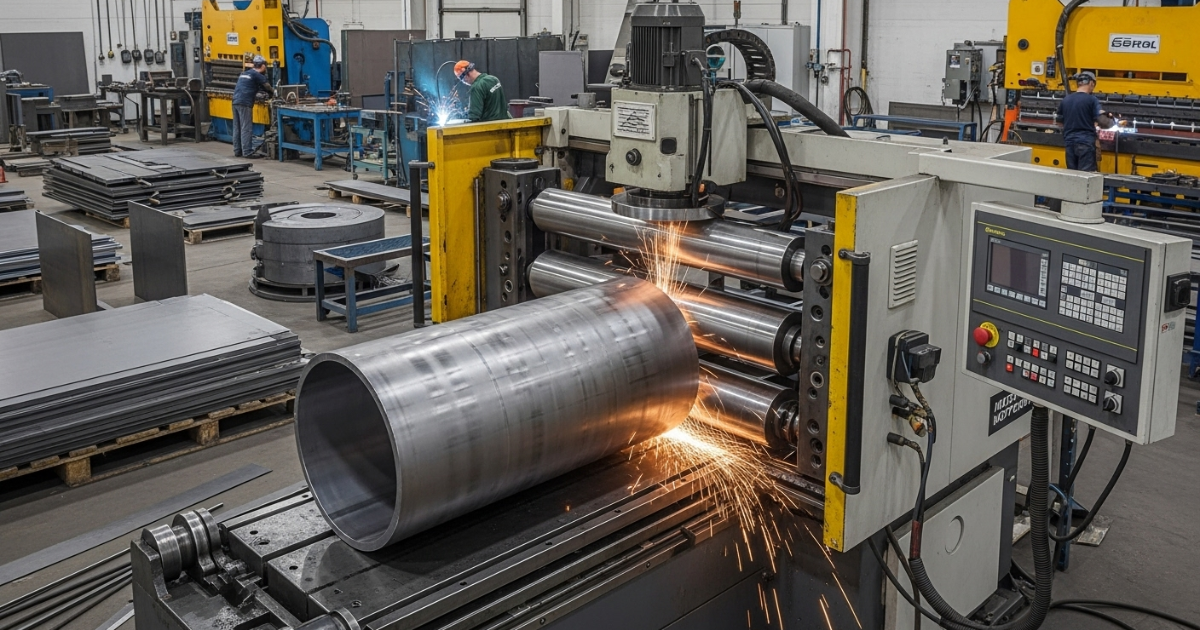
Construction and Infrastructure
NC rolling machines are widely used to produce curved panels, beams, and steel components for buildings, bridges, and tunnels.
Automotive Industry
Car and truck manufacturers rely on plate rolling machines to form fuel tanks, exhaust systems, and structural components.
Shipbuilding
Ships require large curved plates for hulls and decks, which are efficiently formed using heavy-duty industrial rolling machines.
Aerospace Industry
Aircraft structures like fuselage panels and ducts are manufactured with precision rolling processes.
Energy Sector
Wind turbine towers, pressure vessels, and pipelines rely heavily on rolled metal sheets for strength and durability.
General Fabrication
Workshops and medium-scale manufacturers use these machines for custom cylindrical parts, cones, and pipes.
Types of Rolling Machines Used in Fabrication
- 3 Roll Bending Machine – Commonly used for cylindrical and conical rolling.
- 4 Roll Bending Machine – Offers higher precision and control.
- Hydraulic Rolling Machine – Uses hydraulic power for smoother and more powerful rolling.
- Mechanical Rolling Machine – Suitable for lighter applications and smaller workshops.
The nc rolling machine usually comes in hydraulic or mechanical models depending on industry requirements.
NC Rolling Machines vs CNC Rolling Machines
| Feature | NC Rolling Machine | CNC Rolling Machine |
| Ease of Use | User-friendly, requires minimal training | Requires advanced programming knowledge |
| Cost | Affordable for SMEs | Higher investment |
| Precision | High | Higher with complex automation |
| Applications | Medium-scale production | Large-scale, high-volume, complex rolling |
| Maintenance | Low to moderate | Higher and more expensive
|
For many industries, the nc rolling machine is the perfect choice when they need accuracy and productivity without heavy investment.
Features of Modern NC Rolling Machines
- Programmable NC control panel for setting parameters
- Hydraulic drive system for smooth and powerful rolling
- Robust frame for heavy-duty operations
- Adjustable rollers for various thicknesses and materials
- Digital display for precision monitoring
- Safety features for operator protection
Why Industries Still Rely on NC Rolling Machines
- Proven Reliability – Decades of usage with consistent performance.
- Affordable Technology – Lower investment compared to CNC.
- Wide Applications – Suitable for construction, energy, and manufacturing industries.
- Ease of Integration – Can be easily added to existing fabrication setups.
Role of NC Rolling Machines in Productivity Improvement
By automating repetitive rolling tasks, these machines significantly improve productivity. They reduce errors caused by manual handling and ensure every sheet or plate is shaped accurately. This not only saves material but also reduces production time, improving overall profitability.
Maintenance Practices for Long-Term Performance
- Lubrication – Keep all moving parts well-lubricated.
- Check Roller Alignment – Ensures uniform rolling.
- Inspect Hydraulic System – Monitor fluid levels and seals regularly.
- Blade and Roller Cleaning – Remove dust and debris after each operation.
- Routine Inspections – Prevents breakdowns and extends service life.
With regular maintenance, an nc rolling machine can last decades while delivering consistent results.
The Future of NC Rolling Machines
Even with the rapid rise of CNC and robotic technologies, NC rolling machines will continue to play an important role in the fabrication sector. Their cost-effectiveness, durability, and adaptability to different industries ensure they remain a valuable investment. As technology advances, we can expect improvements in digital controls, energy efficiency, and safety features in these machines.
Energymission, as a trusted name in sheet metal processing machinery, is consistently working to upgrade NC rolling machines with advanced features. By combining reliability with innovation, Energymission ensures fabricators get machines that deliver precision, efficiency, and long-term value.
Frequently Asked Questions
Q1: What materials can NC rolling machines handle?
They can roll mild steel, stainless steel, aluminum, and other sheet metals.
Q2: Are they suitable for small workshops?
Yes, their affordability and simple operation make them ideal for small to medium-sized fabrication units.
Q3: How do NC machines compare to manual rolling?
NC machines provide greater accuracy, speed, and consistency compared to manual rolling.
Q4: Can NC rolling machines form conical shapes?
Yes, with proper roller adjustments, they can produce both cylindrical and conical shapes.
Q5: What industries benefit the most from these machines?
Construction, automotive, shipbuilding, aerospace, and energy sectors rely heavily on NC rolling machines.
Conclusion
The nc rolling machine has proven its worth as an essential part of the metal fabrication industry. By offering high accuracy, flexibility, and cost-effective performance, it continues to serve industries ranging from automotive and construction to energy and aerospace.
For fabricators seeking reliable solutions that strike the right balance between performance and affordability, NC rolling machines remain a smart choice. With continuous improvements in design and technology, they are expected to remain a cornerstone of sheet metal fabrication for many years to come.