
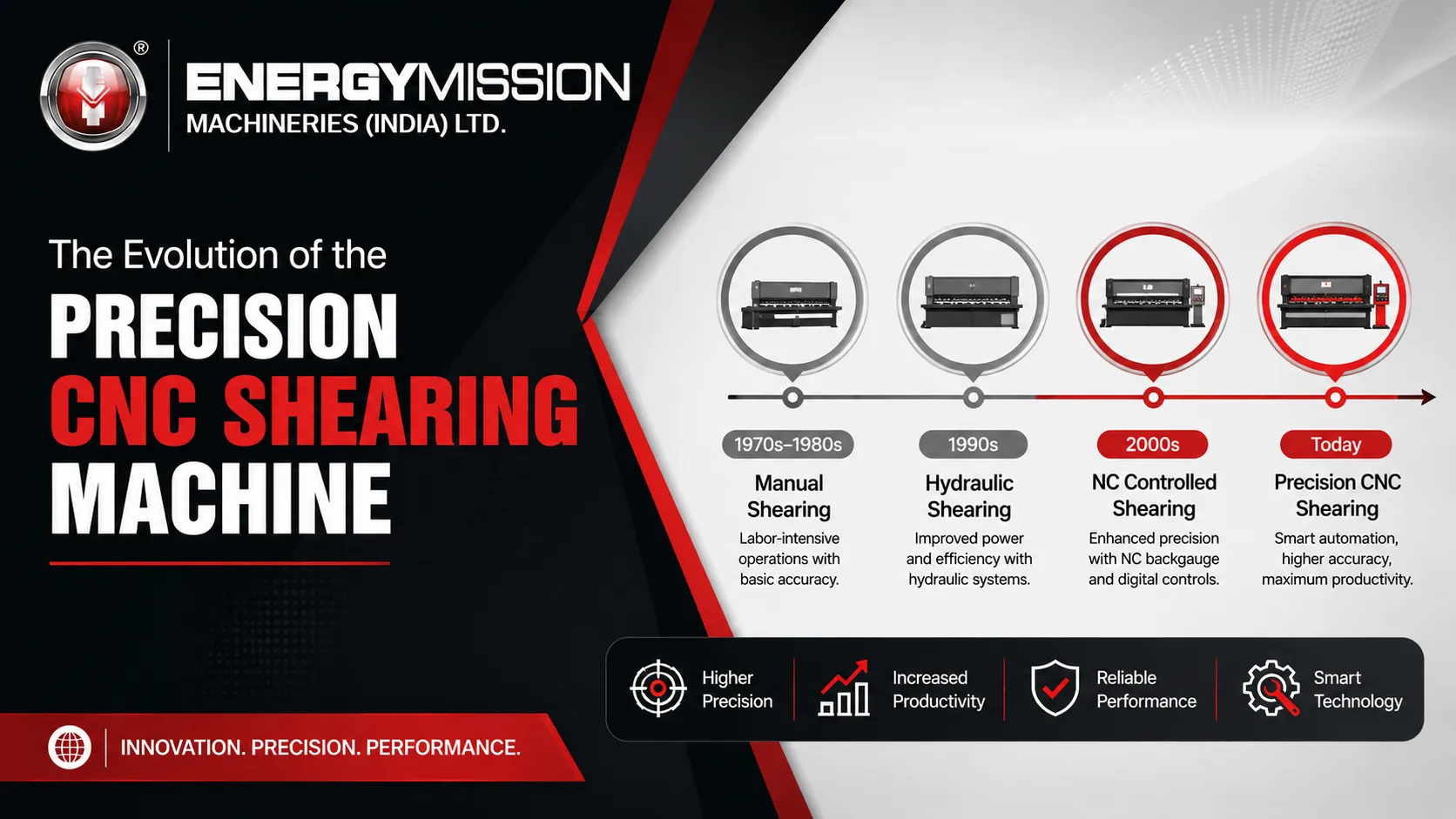
Managing a modern fabrication shop means fighting an aggressive daily war against setup bottlenecks, high scrap rates, and rising labor costs. If your primary metal blanking relies on manual positioning or entry-level NC controllers, your operators are burning hours manually setting backgauges or correcting for material variations. A single inaccurate cut at the front end ripples through your production line, causing severe forming errors when blanks reach your press brakes.
Investing in an industrial cnc shearing machine eliminates this operational risk by replacing human guesswork with automated, real-time parameters. A modern cnc hydraulic shearing machine calculates and adjusts the ideal blade gap, stroke length, and rake angle for every single cut sequence, maximizing accuracy from the first stroke to the last.
In this comprehensive technical analysis, built on more than 15 years of factory floor implementation, you will learn the mechanics behind advanced automation, how to calculate your true tonnage and capacity needs, and how to choose a system engineered to elevate your daily throughput.
How a CNC Hydraulic Shearing Machine Automates Complex Cuts
The foundational advantage of a hydraulic cnc shearing machine is its ability to adapt dynamically to the mechanical properties of different sheet metals. Traditional mechanical or manual shears rely on rigid, unyielding parameters that require operators to manually turn levers or adjust mechanical spacers to reset blade gaps when switching between mild steel and stainless steel.
A precision cnc shearing machine changes this workflow completely by integrating a central controller linked directly to servo-driven axes and proportional hydraulic valves.
The Automated Execution Sequence:
- Dynamic Blade Gap Control (Auto-Gap): The operator selects the material type and thickness from the touchscreen interface. The CNC system instantly positions the upper knife beam using specialized motorized eccentric cams, setting the ideal blade clearance within microns to ensure a burr-free edge.
- Automatic Rake Angle Optimization: Cutting thick sheet metal requires a higher cutting angle (rake angle) to minimize force, while cutting thin strips requires a flat rake angle to prevent structural twisting. The CNC controller monitors and adjusts the hydraulic cylinder stroke heights to set the exact angle needed, preventing localized material distortion.
- Intelligent Backgauge Positioning: Driven by robust AC servo motors and high-precision ballscrews, the rear backgauge assembly retracts instantly during the cutting stroke. This action prevents the sheared metal blank from jamming between the lower blade and the backgauge fingers, extending the lifespan of the mechanical gauges.
By controlling all three variables simultaneously, a cnc hydraulic shearing machine simplifies your setup, transforming complex manual adjustment procedures into a single tap on a touchscreen.
Comparing a Standard Shear with a Hydraulic CNC Shearing Machine
Understanding the return on investment (ROI) for advanced workshop machinery requires comparing the productivity metrics of a modern CNC asset against conventional entry-level equipment.
Here is a balanced comparison highlighting the structural, operational, and financial differences between manual/NC standard cutting systems and an industrial hydraulic cnc shearing machine:
|
Operational Parameter |
Standard Manual / NC Shears |
Advanced CNC Hydraulic Shearing Machine |
|
Setup & Changeover Times |
High (5–10 Mins): Operators must manually measure material, turn handwheels, or adjust shim plates for blade gaps. |
Near Zero (<30 Secs): Blade gap, rake angle, and backgauge position adjust instantly via touch-screen programs. |
|
Edge Finish & Cutting Quality |
Variable: Prone to heavy burrs, camber, and material twist if manual settings aren’t perfectly adjusted. |
Premium & Flat: Precise automated gap control maintains flat, clean blanks with minimal distortion. |
|
Material Yield & Scrap Rates |
Higher Risk: Test cuts are required for new batches, resulting in consistent off-cut material waste. |
Minimized: Pre-programmed material parameters ensure first-time cutting precision, eliminating trial cuts. |
|
Operator Skill Dependence |
Critical: Production speed and accuracy depend entirely on the skill and care of the technician. |
Low: The controller manages complex tolerances, enabling junior operators to run safe, high-speed runs. |
|
Ideal Production Environment |
Low Volume: Best suited for simple job shops handling single, unchanging metal thicknesses. |
High Mix / High Volume: Designed for dynamic workshops running complex, multi-thickness part variations. |
Expert Floor Insight: If your production mix involves regular changes in material thickness such as switching from 2mm aluminum to 6mm mild steel multiple times a day the automated changeovers of a CNC shear can save you up to two hours of idle labor per shift compared to a standard mechanical shear.
How to Choose the Right Machine: A Dedicated Buyer’s Guide
A premium hydraulic shear is a long-term asset that should serve your factory for 15 to 20 years. Choosing the lowest-priced quote without examining structural specifications can leave your workshop with chronic frame deflection and expensive downtime.
When conducting a commercial investigation, ensure you carefully evaluate these four crucial engineering elements:
1. True Capacity Ratings vs. Tensile Material Strengths
Shearing machine capacities are standard-rated based on mild steel plates with a tensile strength of approximately 450 N/mm². If your workshop frequently cuts hard, high-tensile alloys like stainless steel (Grade 304 or 316), the mechanical resistance increases by nearly 50%.
- Always look for a system that provides comfortable power headroom. If your daily production requires slicing 6mm stainless steel sheets, invest in a machine engineered for 8mm or 10mm mild steel to avoid straining your hydraulic seals.
2. Structural Mono-Block Rigidity and Frame Relieving
The immense vertical and horizontal forces generated during a heavy metal cut will naturally push an under-engineered machine frame outward. This frame deflection can cause your blade gap to drift midway through a cut, resulting in uneven edge quality.
- Look for manufacturers that use single-piece, heavy-welded steel mono-block structures that undergo thorough thermal stress-relieving before final machining. A rigid frame keeps the upper blade guided accurately across its entire length.
3. Backgauge Travel and Sheet Support Systems
Examine the physical construction of the rear backgauge. It needs to be heavy enough to withstand impacts from large sheets being positioned by operators. For high-volume thin-sheet metal fabrication, verify if the machine includes an integrated pneumatic sheet support system. This mechanism holds thin, flexible materials flat to prevent them from sagging beneath the backgauge fingers before the blade descends.
4. Advanced Component Origin and Part Availability
A machine tool is only as dependable as its weakest component. Ensure your chosen manufacturer uses globally recognized, premium components. Look for high-pressure industrial valve blocks from brands like Rexroth or Hoerbiger, electrical circuits from Schneider or Siemens, and durable internal seals to ensure easy maintenance for decades.
Maximizing Safety and Speed in CNC Shearing Operations
Modern industrial manufacturing demands high throughput without compromising floor safety. High-speed sheet metal blanking introduces significant risks if proper protective features are omitted.
Integrating an advanced cnc shearing machine helps protect your shop floor by isolating operators from hazardous zones while keeping cycle times fast:
- Rear Optoelectronic Light Curtains: These safety sensors immediately halt the hydraulic downward stroke if an operator or material handler breaks the optical light path at the back of the machine during production.
- Independent Heavy Hold-Down Clamps: Individual hydraulic cylinders clamp down firmly along the cutting beam before the blade moves. This locking mechanism prevents the plate from kicking upward during impact, protecting the operator’s hands at the front feeding table.
- Front Finger Protection Guard: A mechanical barrier allows sheets to slide into the blade zone easily while preventing the operator’s hands from reaching the hazard area, ensuring compliance with global industrial safety standards.
Industry FAQ
What is the main benefit of a variable rake CNC shear over a fixed rake shear?
A variable rake CNC shear allows the operator or system controller to change the pitch angle of the upper blade. Adjusting this angle helps control cutting deformation. By using a shallow rake angle on thin materials, you prevent the cut strips from curling, twisting, or bowing, ensuring flat blanks that are ready for immediate downstream processing without extra straightening.
How does the CNC controller determine the correct blade gap automatically?
The CNC system relies on pre-tested engineering algorithms stored within its memory database. When the operator inputs the specific sheet thickness, tensile strength, and material grade, the controller automatically computes the ideal percentage clearance (typically between 5% to 10% of the material thickness) and commands a dedicated servo motor to shift the blade beam to the precise distance.
What maintenance steps protect a hydraulic cnc shearing machine from losing precision?
To maintain high cutting precision, establish three core routines: first, check and top off the automatic slide guide lubrication system daily; second, verify hydraulic oil cleanliness and replace filters every 2,000 operational hours; third, inspect blade edge wear weekly. Flipped or sharpened blades prevent high tonnage spikes that can cause long-term valve wear. For deeper troubleshooting advice, refer to our factory guide on maintaining sheet metal machinery.
Can a CNC hydraulic shear process high-strength aluminum alloys without marking the surface?
Yes, but it requires specific configuration. You must request your machine manufacturer to fit the independent hydraulic hold-down cylinders with specialized neoprene or polyurethane protective pads. These soft boots absorb the immense clamping forces without bruising or marking the delicate surfaces of polished aluminum or pre-coated building panels.
Why do sheared metal pieces sometimes show a heavy twist or spiral curve?
Material twist typically occurs when cutting narrow strips from thin sheet metal. If the machine’s rake angle is set too steep, the blade pushes the metal downward too aggressively, causing permanent distortion. Lowering the rake angle via the CNC panel and utilizing a rear pneumatic sheet support system will help keep thin strips flat.
What is the purpose of the shadow-line lighting system on premium shears?
A shadow-line or optical cutting-line projector casts a crisp, high-visibility line along the exact path where the upper blade will meet the lower bed. This feature allows operators to quickly align custom sheets, handwritten layout marks, or irregular plates manually, ensuring accurate cuts even when bypassing the automated backgauge programs.
What is a CNC shearing machine?
A CNC shearing machine is an automated industrial machine tool used to cut straight lines on sheet metal plates. It utilizes a centralized computerized controller to automatically adjust the blade gap, rake angle, stroke length, and motorized backgauge based on material inputs, delivering precise, high-speed, and repeatable cuts while reducing scrap.
Key Takeaways for Factory Managers
- Automated Adaptability: A cnc hydraulic shearing machine eliminates manual changeover delays by instantly adjusting blade gaps and rake angles for different material thicknesses via automated touchscreen programs.
- Reduced Downstream Rework: Clean, square blanks eliminate fit-up issues at the welding station and prevent angular drift during press brake forming operations.
- Enhanced Material Yields: Precise automated positioning helps eliminate costly trial cuts, saving premium raw materials and keeping scrap rates low.
- Optimized Floor Throughput: Using a high-speed CNC shear for straight blanking operations keeps advanced fiber lasers focused on intricate profile designs, maximizing shop productivity.
- Long-Term Asset Strength: Choosing single-piece, stress-relieved steel frames ensures your machine maintains strict micron-level blade clearances under heavy production loads.
Partner with India’s Premier Sheet Metal Machinery Manufacturer
Maximizing your factory’s production capacity requires high-performance machinery engineered for long-term reliability. At Energy Mission Machineries (India) Ltd., we bring over 25 years of design and manufacturing experience directly to your facility. We build dependable industrial machinery tailored to the evolving demands of modern workshops.
Our diverse engineering lineup includes high-precision CNC Press Brakes, durable Hydraulic Press Brake Machines, advanced CNC Shearing Machines, heavy-duty Plate Rolling Machines, versatile Ironworker Machines, and specialized Busbar Processing systems. We proudly support and export to expanding fabrication networks throughout India, the UAE, Saudi Arabia, Oman, Qatar, Kuwait, Bahrain, Africa, and other international markets.
From initial workflow analysis and custom frame configuration to technical consultation and rapid after-sales service, our engineering team is focused on keeping your shop floor moving.