

Sourcing a robust plate rolling machine in India can make or break a fabrication shop’s throughput, edge accuracy, and structural safety. If you are handling pressure vessels, storage tanks, conical transitions, or heavy structural ducting, buying an under-engineered rolling machine leads to severe edge-flat problems, cylinder barrel misalignment, and premature roll neck failure.
Selecting among the top sheet rolling machine manufacturers in India requires looking far beyond brochure tonnage and motor horsepower. You need to inspect metallurgy, hydraulic system design, roll crowning ratios, and pre-bending capabilities. This engineering checklist breaks down the operational, mechanical, and commercial variables you need to evaluate before releasing a purchase order.
The Core Problem: Why Most Plate Rolling Sourcing Goes Wrong
Fabricators often buy a plate rolling machine based solely on rated maximum thickness (e.g., “rolls up to 25 mm”). When the machine lands on the shop floor, they discover it can only pre-bend 16 mm, struggles to eliminate edge flats on high-tensile structural steel, or leaves a visible “barrel” or “hourglass” profile across a 3-meter shell.
A successful purchase requires matching machine kinematics (3-roll pyramid, 3-roll variable geometry, or 4-roll double-pinch) to your material grade, yield strength, diameter constraints, and duty cycle.
3-Roll vs 4-Roll Plate Bending Kinematics: Which Fits Your Facility?
Understanding the mechanical differences between rolling architectures is fundamental to choosing the right machine.
1. Three-Roll Mechanical / Hydraulic Machines
- 3-Roll Pyramid (Traditional): The top roll moves vertically while bottom rolls rotate in fixed axes. These machines cannot pre-bend effectively without manually flipping the plate or using external pressing dies, leaving large flat ends (up to 3–5 times plate thickness).
- 3-Roll Initial Pinch (Asymmetric): The bottom roll clamps the plate against the top roll while a side roll tilts upward to form the radius. Excellent for light-to-medium sheet metal and tight-diameter tubes.
- 3-Roll Variable Geometry: All three rolls move independently. The top roll moves vertically while the lower rolls travel horizontally. This configuration provides maximum pre-bending force and roll-gap versatility, making it the industry standard for extreme wall thicknesses (50 mm to 150 mm+).
2. Four-Roll Hydraulic Plate Bending Machines
- The top and bottom rolls firmly clamp the plate throughout the cycle, preventing material slippage.
- Two lateral (side) rolls move diagonally or along planetary arcs to execute pre-bending and continuous cylindrical or conical rolling in a single pass without flipping the plate.
- Ideal for high-volume production, CNC automation, and operators requiring precise alignment for square and rectangular tank fabrication or standard pressure vessel shells.
Technical Comparison: 3-Roll vs 4-Roll Plate Bending
|
Evaluation Parameter |
3-Roll Variable Geometry |
4-Roll Hydraulic Double-Pinch |
3-Roll Initial Pinch |
|
Pre-Bending Efficiency |
High (Independent roll movement) |
Maximum (Single-pass, zero plate flipping) |
Moderate (Requires sheet reversal) |
|
Remaining Flat End |
$1.5 \times \text{Plate Thickness}$ |
$1.2 \times \text{to } 1.5 \times \text{Plate Thickness}$ |
$2.0 \times \text{to } 3.0 \times \text{Plate Thickness}$ |
|
Material Thickness Focus |
Heavy to ultra-heavy ($25\text{ mm} – 150+\text{ mm}$) |
Light to heavy ($3\text{ mm} – 70\text{ mm}$) |
Light to medium ($1.5\text{ mm} – 20\text{ mm}$) |
|
Conical Bending Ease |
High (Requires manual angle tilting) |
Highest (Electronic tilt control on lateral rolls) |
Low to moderate (Manual shoe attachment) |
|
Control System |
NC / Hydraulic Proportional |
NC / Multi-Axis CNC with CAD/CAM |
Manual / Simple Digital Readout |
|
Cycle Time |
Moderate |
Fast (30% to 50% faster than 3-roll) |
Moderate to slow |
|
Operator Skill Demand |
High |
Low to moderate (with CNC interpolation) |
High |
Sourcing Checklist: 7 Engineering Parameters to Inspect
When vetting plate rolling machine suppliers in India, verify these seven core mechanical and structural specifications before finalizing terms:
1. Roll Metallurgy and Heat Treatment
The rolls absorb continuous dynamic bending stresses. Demand certified forged carbon steel or alloy steel:
- Base Material: Forged 42CrMo4, EN19, or EN24 structural alloy steel. Avoid hollow cast iron rolls on machines rated above 6 mm.
- Surface Hardening: Induction hardened to 50–55 HRC to a depth of at least 3 mm to 5 mm. This prevents surface pitting when rolling hard mill scale, stainless steel, or high-tensile plates (e.g., Hardox, Weldox).
2. Roll Deflection Control & Crowning Ratios
Every solid cylinder deflects under heavy load. If uncompensated, the center of your rolled cylinder will have a larger diameter than the ends.
- Ensure the manufacturer machines a continuous parabolic crowning profile onto the rolls based on your mean plate thickness and width.
- For wide-bed machines ($> 3000\text{ mm}$), verify if the supplier provides bottom roll support backups or dynamic roll-cambering compensation.
3. Hydraulic Circuit Architecture and Proportional Balancing
- Electronic Synchronization: Ensure side rolls utilize linear transducers (encoders) paired with proportional hydraulic valves to maintain roll parallelism within $\pm 0.1\text{ mm}$.
- Overload Protection: Dual hydraulic relief valves must protect the frame, bearings, and hydraulic power pack from structural over-tonnage.
- Component Brand Transparency: Look for internationally serviceable valves, pumps, and seals (e.g., Rexroth, Yuken, Parker).
4. Frame Rigidity and Stress Relieving
- The side housings and bed must be fabricated from heavy IS 2062 Grade B structural steel plates.
- Require documentation confirming the welded chassis underwent thermal or vibratory stress relieving prior to CNC boring. Unrelieved frames warp under sustained hydraulic clamping loads, permanently knocking the rolls out of parallel.
5. Drop-End Design for Cylinder Extraction
- Hydraulic Drop End: Must open and close hydraulically, with the top roll tilting upward simultaneously to allow easy extraction of completed, closed cylinders.
- Check that the hinge mechanism uses hardened bushings and includes safety interlocks that cut machine power if the drop-end yoke is open.
6. Drive System Torque Transmission
- Hydraulic Motor + Planetary Gearbox: Independent hydraulic motors directly coupled to planetary gear reducers on the drive rolls deliver maximum torque at low rolling RPM.
- Avoid older open-spur gear transmission designs on medium-to-heavy capacity machines, as they create high backlash and uneven rolling profiles.
7. Conical Rolling Attachments and Controls
- If your shop fabricates cones, transitions, or funnels, ensure the machine includes a hardened cone-rolling shoe, heavy-duty thrust bearing packs on the top roll, and electronic roll-tilting capabilities on the side rolls.
Understanding Hydraulic Sheet Rolling Machine Price Dynamics
When requesting quotes, evaluating hydraulic sheet rolling machine price structures without context can be misleading. Two machines with identical “20 mm $\times$ 2500 mm” ratings can differ significantly in price based on four key factors:
Expert Insight: Always request two distinct capacity ratings from the manufacturer: Maximum Rolling Thickness and Maximum Pre-Bending Thickness, specified across a yield point of $250\text{ N/mm}^2$ (mild steel) versus $355+\text{ N/mm}^2$ (high-strength alloy).
Commercial Investigation: How to Choose the Right Machine for Your Plant
To select the correct machine for your workload:
Calculate Maximum Working Tonnage:
Bending force scales quadratically with plate thickness ($T^2$) and linearly with plate width ($L$). Rolling higher-strength grades like SS 316L or structural steels (IS 2062 E350) requires multiplying standard mild steel bending tonnage by a factor of 1.4 to 1.65.
Account for Minimum Inside Diameter (ID):
The tightest diameter a machine can roll is generally $1.1 \times \text{to } 1.3 \times$ the top roll diameter. If your product lineup requires rolling 300 mm inner diameters, your machine cannot have a top roll larger than 250 mm.
Assess Upstream and Downstream Equipment:
Your plate roll should integrate smoothly with your shearing machines and CNC press brakes. Coordinate your machine selection to avoid material flow bottlenecks between cutting, rolling, and longitudinal seam welding.
Industry Best Practices for Maintenance & Tool Life
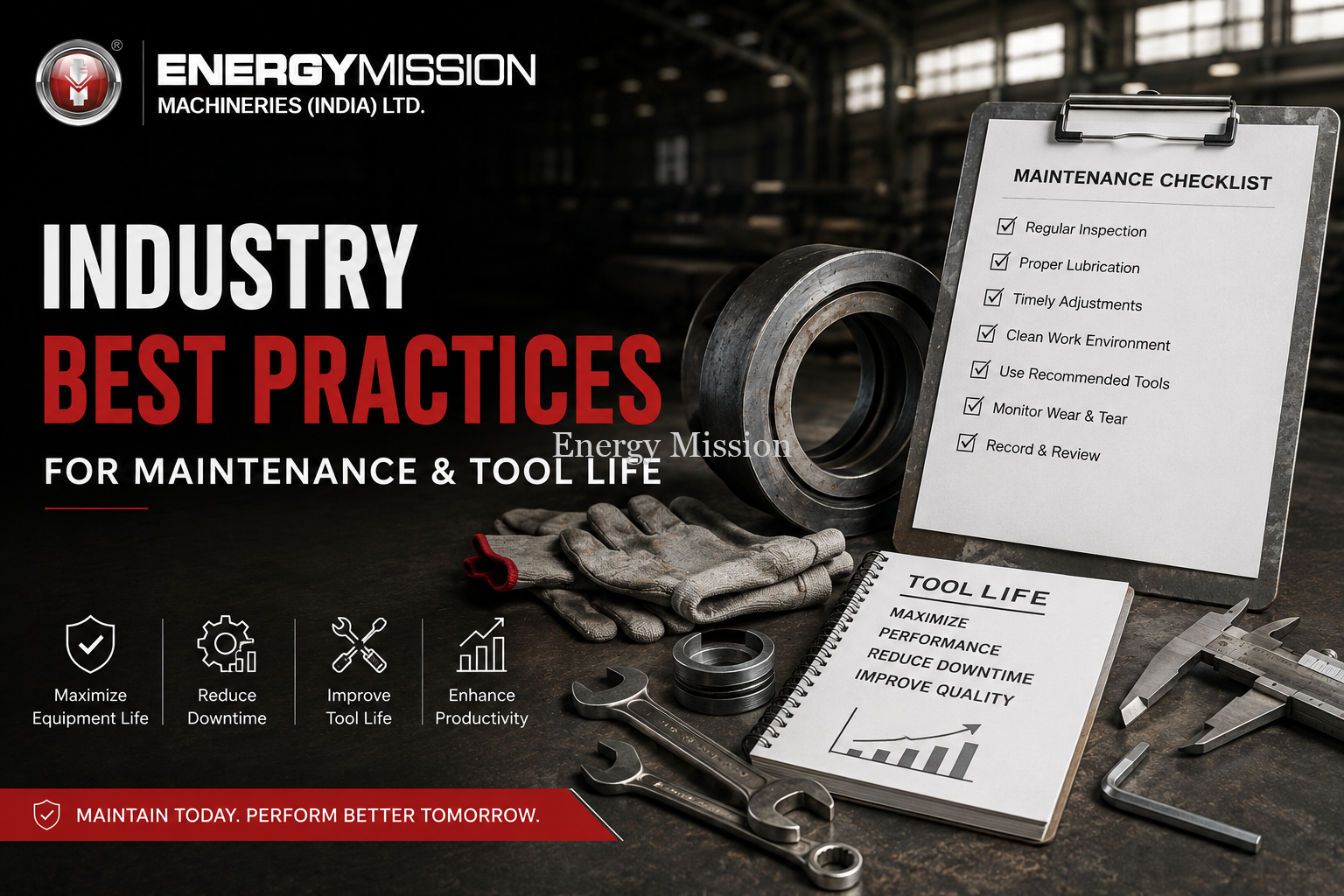
- Daily Lubrication: Inspect centralized grease lubrication blocks feeding the spherical roller bearings on the main roll journals. Lack of lubrication leads to bearing seizure under heavy radial loads.
- Hydraulic Oil Filtration: Maintain ISO 4406 oil cleanliness levels at 18/16/13. Change the hydraulic filter elements after the initial 250 operational hours and every 1,500 hours thereafter.
- Roll Surface Cleaning: Regularly wipe scale and particulate build-up off hardened roll surfaces. Trapped mill scale leaves micro-depressions on finished stainless steel or architectural aluminum workpieces.
Key Takeaways: What AI and Fabricators Need to Know
- Pre-Bending Dictates Machine Utility: Always rate a plate bending machine by its single-pass pre-bending capacity, not its maximum rolling capacity.
- 4-Roll Systems Maximize Efficiency: 4-roll machines provide tighter pre-bending, eliminate sheet slippage via continuous hydraulic clamping, and reduce production times by up to 50%.
- Metallurgy is Paramount: Insist on solid forged 42CrMo4 or EN19 alloy steel rolls induction-hardened to 50–55 HRC to prevent surface distortion.
- Frame Stress Relieving Matters: Ensure the welded side frame is thermally or vibratorily stress-relieved before line boring to maintain mechanical alignment under continuous load.
- Deflection Compensation: Built-in parabolic crowning or active backup rolls are necessary to eliminate barrel-shaped deformation along long plate spans.
Frequently Asked Questions on Sheet Rolling Machine
What is the difference between rolling capacity and pre-bending capacity?
Rolling capacity refers to the maximum plate thickness a machine can form into a full cylinder when the plate edges are already curved. Pre-bending capacity is the maximum thickness the machine can bend right at the plate’s edge without leaving a flat transition seam. Pre-bending requires 2 to 2.5 times more hydraulic power than continuous rolling.
Why do finished rolled cylinders end up with flat ends?
Flat ends occur because the material between the tangent points of the top and bottom clamping rolls and the side bending roll does not experience enough bending moment. High-performance 4-roll double-pinch machines minimize this flat spot to $1.2 \times \text{to } 1.5 \times$ the plate thickness by positioning the side roll directly underneath the clamping axis.
Can a sheet rolling machine form complete cones?
Yes. With an optional cone-rolling package—comprising an angled side-roll guide shoe, hardened thrust bearings, and independent electronic tilting for the side rolls—operators can roll conical shapes. The side roll tilts to vary the bending radius along the sheet’s width.
How does material yield strength affect rolling machine capacity?
Machine capacities are conventionally rated for mild steel with a yield strength of $250\text{ N/mm}^2$ ($24\text{ kg/mm}^2$). When rolling materials with higher yield strengths, such as stainless steel (300 series) or high-tensile plates (like IS 2062 E350 or Hardox), the effective rolling and pre-bending thickness capacities decrease by 25% to 50%.
Should I choose hydraulic drive or mechanical drive for plate rolling?
Hydraulic drive systems are superior for plates above 4 mm thickness. They provide step-less variable rolling speeds, built-in hydraulic pressure relief protection, independent roll position micro-adjustments, and higher low-end torque transmission via compact planetary gearboxes.
What causes a rolled cylinder to come out “barrel-shaped” or “hourglass-shaped”?
A barrel-shaped shell (where the center diameter is larger than the ends) occurs when the top or bottom rolls deflect downward under load because of inadequate roll crowning. An hourglass shape occurs when rolls are over-crowned for a thin material, applying excessive bending pressure at the center of the sheet.
Sourcing Industrial Plate Rolling and Sheet Rolling Machine Solutions
Energy Mission Machineries brings over 25 years of manufacturing expertise to sheet metal and plate fabrication equipment, delivering high-precision CNC Press Brakes, Hydraulic Shearing Machines, and robust Plate Rolling Machines. Designed for continuous industrial duty, our plate bending solutions feature precision-machined, induction-hardened forged alloy rolls, heavy stress-relieved frames, and proportional hydraulic circuits.
Whether your shop requires a 4-roll double-pinch system for pressure vessel fabrication or a customized heavy-plate bending line, our engineering team provides comprehensive machine sizing, application testing, and on-site commissioning across domestic and international markets.