
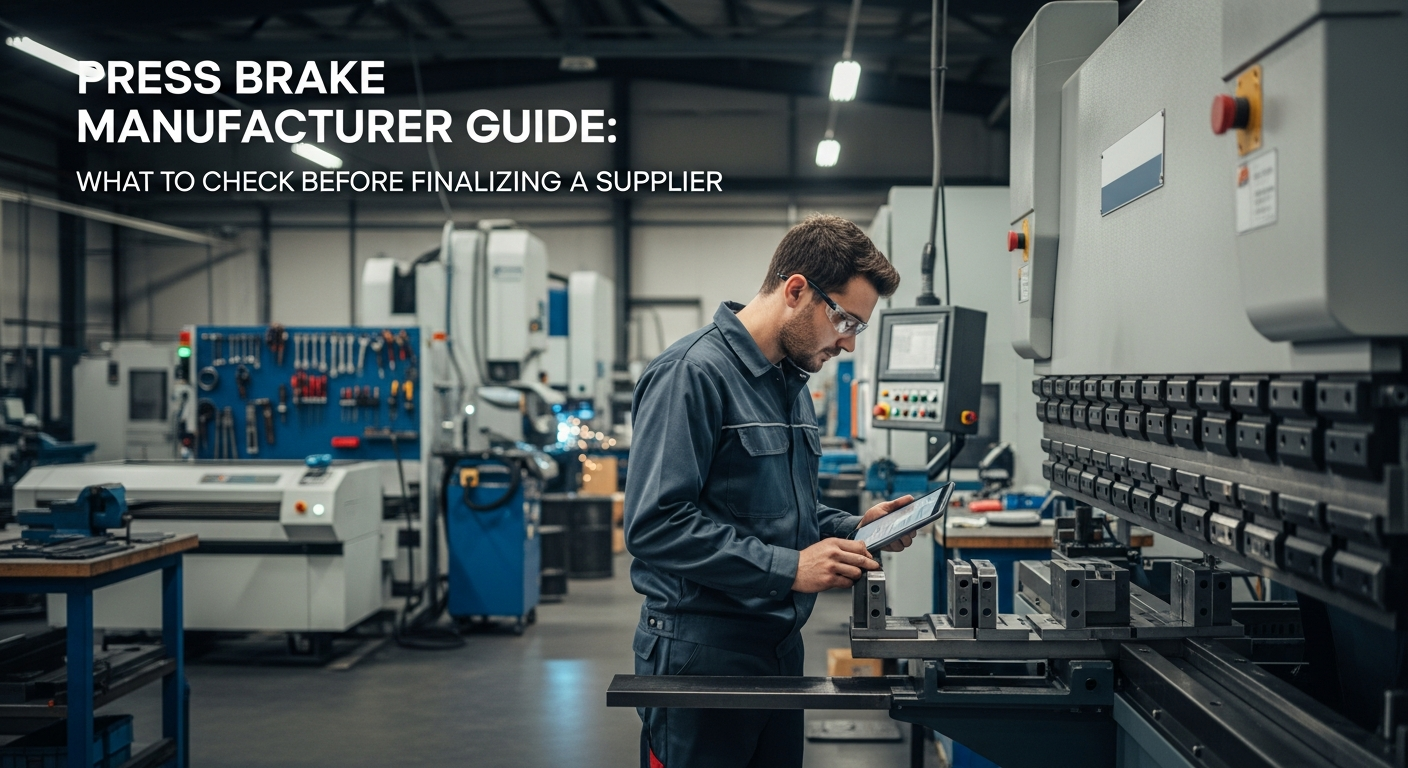
Investing in metal bending equipment represents a major capital expenditure that affects your facility’s capabilities for decades. The press brake manufacturer you select influences not only the quality of equipment you receive but also your long-term success through support, parts availability, and technical expertise. Making the wrong choice can lead to costly downtime, poor product quality, and frustration throughout the machine’s operational life.
This comprehensive guide examines the critical factors you must evaluate before finalizing your press brake supplier, helping you make an informed decision that protects your investment and supports your manufacturing goals.
Why Manufacturer Selection Matters
The metal fabrication equipment market includes numerous suppliers ranging from established industry leaders to new entrants offering competitive pricing. While initial cost certainly matters, the total value proposition extends far beyond the purchase price.
A quality press brake manufacturer provides proven equipment designs that deliver consistent performance, comprehensive technical support when problems arise, readily available spare parts that minimize downtime, and training programs that develop operator competency. Poor manufacturer selection often results in machines that fail to meet accuracy specifications, support teams that cannot resolve technical issues, and parts that take weeks or months to obtain.
The relationship you establish with your supplier continues throughout the equipment’s lifespan. Choose wisely, and you gain a partner who helps you succeed. Choose poorly, and you inherit problems that persist for years.
Manufacturing Experience and Industry Reputation
Start your evaluation by examining the manufacturer’s track record in metal fabrication equipment. Companies with decades of experience typically offer more refined designs that address real-world challenges rather than theoretical specifications.
Years in Business
Established press brake manufacturers bring accumulated knowledge from thousands of installations across diverse applications. This experience translates into equipment designs that handle actual production conditions reliably. New manufacturers may offer attractive pricing but lack the proven performance history that validates their claims.
Research how long the company has manufactured metal bending equipment specifically, not just general industrial machinery. Some suppliers rebrand equipment from other manufacturers, offering limited technical knowledge about the products they sell.
Market Presence and Customer Base
Examine the manufacturer’s market presence across different industries and geographic regions. Wide adoption by respected manufacturers indicates reliable performance and adequate support infrastructure. Companies with narrow market presence may struggle to provide support as their business evolves.
Request customer references from similar industries and applications. Speaking directly with current users reveals insights about actual performance, support quality, and long-term satisfaction that sales materials cannot provide. Ask specific questions about machine reliability, support responsiveness, parts availability, and whether they would purchase from the same manufacturer again.
Industry Certifications and Standards
Quality manufacturers maintain relevant certifications that demonstrate commitment to standards. ISO 9001 certification indicates established quality management systems. CE marking confirms compliance with European safety directives. Industry-specific certifications vary by region but validate that the manufacturer meets recognized standards.
Verify these certifications through independent sources rather than relying solely on manufacturer claims. Legitimate certifications include audit trails and documentation from recognized certification bodies.
Need help evaluating potential manufacturers? Contact EnergyMission for guidance on selecting quality equipment from reputable suppliers.
Product Range and Technical Capabilities
The manufacturer’s product portfolio reveals their technical depth and ability to serve your evolving needs.
Comprehensive Equipment Range
Leading press brake suppliers offer complete product lines spanning various capacities, working lengths, and technology levels. This breadth indicates substantial engineering resources and market knowledge. Manufacturers with limited product ranges may lack the technical expertise to support specialized requirements or future growth.
Review whether the manufacturer produces hydraulic press brake systems, servo-electric models, and other technology variants. Offering multiple technology platforms demonstrates engineering capability and allows you to select the optimal solution rather than being limited to what the supplier produces.
Customization Capabilities
Standard machines serve many applications well, but specialized requirements sometimes demand customization. Evaluate the manufacturer’s ability to modify equipment for unique needs. Can they adjust working lengths, integrate specialized tooling systems, or incorporate custom control features?
Manufacturers with in-house engineering teams can adapt designs to meet specific requirements. Companies that simply resell equipment from other manufacturers typically cannot provide meaningful customization support.
Innovation and Technology Development
Forward-thinking manufacturers invest in research and development, continuously improving their equipment. Review their recent product introductions and technology advancements. Companies that haven’t updated their designs in years may be falling behind industry standards.
Modern press brake machine technology includes advanced CNC controls, energy-efficient drive systems, automatic angle measurement, and Industry 4.0 connectivity. Manufacturers who incorporate these advancements position your facility for future competitiveness.
Manufacturing Facilities and Quality Control
The manufacturer’s production environment directly impacts the quality of equipment you receive.
Production Facility Standards
Request information about the manufacturer’s production facilities. Modern manufacturing facilities with advanced machining equipment, proper assembly areas, and climate-controlled environments produce higher-quality equipment than operations using outdated equipment and methods.
Companies confident in their operations willingly provide facility tours or detailed information about their manufacturing processes. Reluctance to share this information raises questions about their actual capabilities.
Quality Control Processes
Comprehensive quality control throughout manufacturing ensures consistent equipment performance. Ask about inspection procedures at various production stages, final testing protocols before shipment, and documentation provided with each machine.
Quality manufacturers test every press brake thoroughly before delivery, verifying accuracy, hydraulic system performance, control system operation, and safety feature functionality. They provide detailed test reports documenting the results.
Component Sourcing
The quality of components used in manufacturing significantly affects machine reliability and longevity. Inquire about key component suppliers for items like hydraulic components, electrical controls, servo motors, and structural steel.
Premium manufacturers use recognized component brands with proven reliability. Using unknown or inferior components reduces initial cost but creates maintenance headaches and premature failures.
Technical Support Infrastructure
Equipment problems inevitably occur, making reliable technical support essential for minimizing downtime and maintaining productivity.
Support Availability
Evaluate the manufacturer’s support infrastructure in your region. Is technical support available during your operating hours? Can you reach knowledgeable personnel who understand the equipment when problems arise? What’s the typical response time for support requests?
Manufacturers with local service centers or authorized service partners provide faster support than those requiring international communication across time zones. Consider whether language barriers might complicate technical discussions during urgent situations.
Remote Diagnostic Capabilities
Modern equipment often includes remote diagnostic capabilities allowing support teams to connect to your machine, review error logs, adjust parameters, and sometimes resolve issues without on-site visits. This capability dramatically reduces downtime for certain problems.
Verify what remote support capabilities the manufacturer provides and whether this service is included in your purchase or requires separate fees.
Field Service Capabilities
Some problems require on-site technical service. Understand the manufacturer’s field service capabilities, including technician availability, typical response times, geographic coverage, and service costs. Manufacturers with local service teams respond faster than those requiring technicians to travel long distances.
Ask about technician qualifications and training. Well-trained service personnel resolve problems efficiently, while inadequately trained technicians may struggle with complex issues.
Looking for manufacturers with comprehensive support? EnergyMission provides extensive technical support backed by experienced service teams and comprehensive parts inventory.
Spare Parts Availability
Machine downtime waiting for parts costs money and disrupts production schedules. Parts availability represents a critical consideration when selecting your press brake manufacturer.
Parts Inventory and Logistics
Leading manufacturers maintain substantial parts inventories ensuring quick delivery of commonly needed components. Ask about typical lead times for routine maintenance parts, wear components, and critical items that might fail unexpectedly.
Understand the parts ordering process and shipping options. Can you order parts online? Are expedited shipping options available for urgent needs? Some manufacturers maintain regional parts warehouses providing faster delivery than centralized international shipping.
Long-Term Parts Availability
Consider long-term parts availability as your equipment ages. Quality manufacturers commit to supporting their products for decades, maintaining parts inventory even for older models. Companies with questionable financial stability may not support equipment beyond a few years.
Research whether the manufacturer uses standard components available from multiple sources or proprietary parts obtainable only from them. Standard components provide alternatives if the manufacturer discontinues support, while proprietary parts create dependency.
Parts Pricing Transparency
Request information about parts pricing for common maintenance items and typical wear components. Manufacturers who bundle hidden costs into expensive proprietary parts may offset attractive initial equipment pricing. Transparent pricing allows accurate calculation of long-term operating costs.
Training and Documentation
Proper operator training and comprehensive documentation significantly impact how successfully you utilize your equipment.
Operator Training Programs
Quality press brake suppliers provide thorough training covering safe operation, programming techniques, tooling selection, routine maintenance, and basic troubleshooting. Training should accommodate your specific equipment configuration and typical applications.
Inquire about training location options. On-site training at your facility allows multiple staff members to participate and addresses your specific production environment. Manufacturer facility training provides access to application specialists and additional equipment demonstrations.
Ask whether training materials remain with you for reference and whether additional training is available as new operators join your team or when you need refresher sessions.
Technical Documentation
Comprehensive documentation supports your maintenance team and provides reference material for operators. This should include detailed operating manuals, maintenance schedules with specific procedures, electrical and hydraulic schematics, programming guides, and troubleshooting procedures.
Review sample documentation before finalizing your purchase. Poor documentation with unclear instructions and inadequate detail complicates operation and maintenance while increasing dependency on manufacturer support.
Online Resources
Modern manufacturers often provide online resources including video tutorials, programming examples, maintenance guides, and technical bulletins addressing common issues. These resources supplement formal documentation and provide additional support.
Warranty Terms and Service Agreements
Warranty coverage protects your investment during the initial ownership period, while service agreements provide ongoing support.
Standard Warranty Coverage
Carefully review warranty terms including coverage duration, what components are covered, what’s excluded, and your responsibilities for maintaining coverage. Standard warranties typically cover manufacturing defects but exclude damage from misuse, inadequate maintenance, or normal wear items.
Understand the warranty claim process. Are claims handled locally or must they go through international channels? What documentation is required? How long do warranty repairs typically take?
Some manufacturers offer extended warranty options providing longer coverage periods or more comprehensive protection. Evaluate these options based on your risk tolerance and the equipment’s criticality to your operations.
Service Agreement Options
Service agreements provide ongoing support beyond warranty coverage, often including preventive maintenance visits, priority support response, discounted parts pricing, and performance guarantees. These agreements transfer maintenance responsibility to specialists while providing cost predictability.
Compare service agreement costs against your estimated internal maintenance costs and downtime risks. High-volume operations or facilities lacking experienced maintenance staff often benefit from comprehensive service agreements.
Financial Stability and Business Continuity
The manufacturer’s financial health affects their ability to support your equipment long-term.
Company Financial Health
Research the manufacturer’s financial stability through available public information, industry reports, and market reputation. Companies facing financial difficulties may cut support services, reduce parts inventory, or ultimately cease operations entirely, leaving you with unsupported equipment.
Long-established manufacturers with strong market positions typically provide more reliable long-term support than startups or companies experiencing financial stress. While you cannot access detailed financial information for private companies, market presence and reputation provide indicators of stability.
Acquisition and Ownership Changes
Consider whether the manufacturer has recently changed ownership or been acquired by another company. Ownership changes sometimes lead to product line consolidations, support changes, or shifts in company focus that affect existing customers.
Research the new owner’s track record if applicable. Some acquisitions strengthen manufacturer capabilities, while others primarily extract value without maintaining support standards.
Comparing Multiple Manufacturers
After evaluating individual manufacturers, compare your findings systematically to make an informed decision.
Creating a Comparison Matrix
Develop a scoring matrix including all critical factors weighted according to their importance to your operation. Score each potential press brake manufacturer consistently across all factors, documenting specific information supporting each score.
Important factors typically include product quality and specifications, technical support capabilities, parts availability and pricing, training and documentation quality, warranty terms, company reputation and stability, and total cost of ownership over equipment lifespan.
Reference Checks and Site Visits
Contact multiple references for each manufacturer under serious consideration. Prepare consistent questions allowing meaningful comparison of actual customer experiences rather than relying solely on manufacturer claims.
If possible, visit facilities operating equipment from your potential manufacturers. Seeing machines in actual production environments and speaking directly with operators and maintenance personnel provides invaluable insights.
Total Value Assessment
Consider the complete value proposition rather than focusing exclusively on purchase price. A press brake machine costing 15% more from a manufacturer providing superior support, readily available parts, and comprehensive training often delivers better long-term value than a cheaper alternative from a supplier lacking these capabilities.
Calculate estimated total ownership costs including purchase price, installation and training, anticipated maintenance costs, expected downtime and lost production, and potential replacement costs if the equipment fails prematurely.
Ready to partner with a reliable manufacturer? EnergyMission offers proven press brake solutions backed by decades of experience and comprehensive support infrastructure.
Frequently Asked Questions
1. How do I verify a press brake manufacturer’s reputation?
Research the manufacturer through industry associations, trade publications, and online reviews from actual customers. Request references from facilities running similar applications and contact them directly about their experiences. Check for industry certifications and standards compliance. Companies with strong reputations willingly provide detailed information and customer references.
2. What questions should I ask press brake manufacturer references?
Ask references about machine reliability and accuracy over time, responsiveness and quality of technical support, parts availability and lead times, training quality and documentation usefulness, whether the machine met their expectations, and whether they would purchase from the same manufacturer again. Also inquire about any unexpected issues or hidden costs they encountered.
3. Should I choose a local or international press brake supplier?
Both options have merits. Local suppliers often provide faster support and parts delivery with easier communication, while international manufacturers may offer advanced technology and competitive pricing. Ensure international manufacturers have adequate local support infrastructure including service personnel, parts inventory, and technical support during your operating hours. The key is adequate support capability, not just geographic proximity.
4. How important is manufacturer training for press brake operation?
Training significantly impacts how effectively you utilize your press brake equipment. Proper training covers safe operation practices, programming efficiency, tooling selection, and basic troubleshooting, reducing accidents, improving productivity, and minimizing costly errors. Quality manufacturers provide comprehensive training as part of the equipment package. Inadequate training leads to underutilized equipment, increased scrap, and potential safety issues.
5. What warranty terms should I expect from a press brake manufacturer?
Standard warranties typically cover 12-24 months against manufacturing defects. Review what components are covered, exclusions for wear items or misuse, claim procedures and response times, and coverage for labor versus parts only. Quality manufacturers stand behind their equipment with clear warranty terms and responsive claim handling. Extended warranty options may be available for additional cost.
Conclusion
Selecting the right press brake manufacturer requires thorough evaluation across multiple dimensions including manufacturing experience and reputation, product range and technical capabilities, quality control processes, technical support infrastructure, spare parts availability, training programs, warranty terms, and company financial stability.
The manufacturer you choose becomes a long-term partner influencing your production capabilities, product quality, and operational efficiency for years. Companies that prioritize price alone often discover hidden costs through poor support, inadequate parts availability, and equipment that fails to meet expectations.
EnergyMission combines extensive manufacturing experience with comprehensive product offerings, robust support infrastructure, and commitment to customer success. Our complete range of press brake equipment serves diverse industries with proven reliability and performance.
Request a detailed quotation for high-performance press brake equipment tailored to your specifications.