
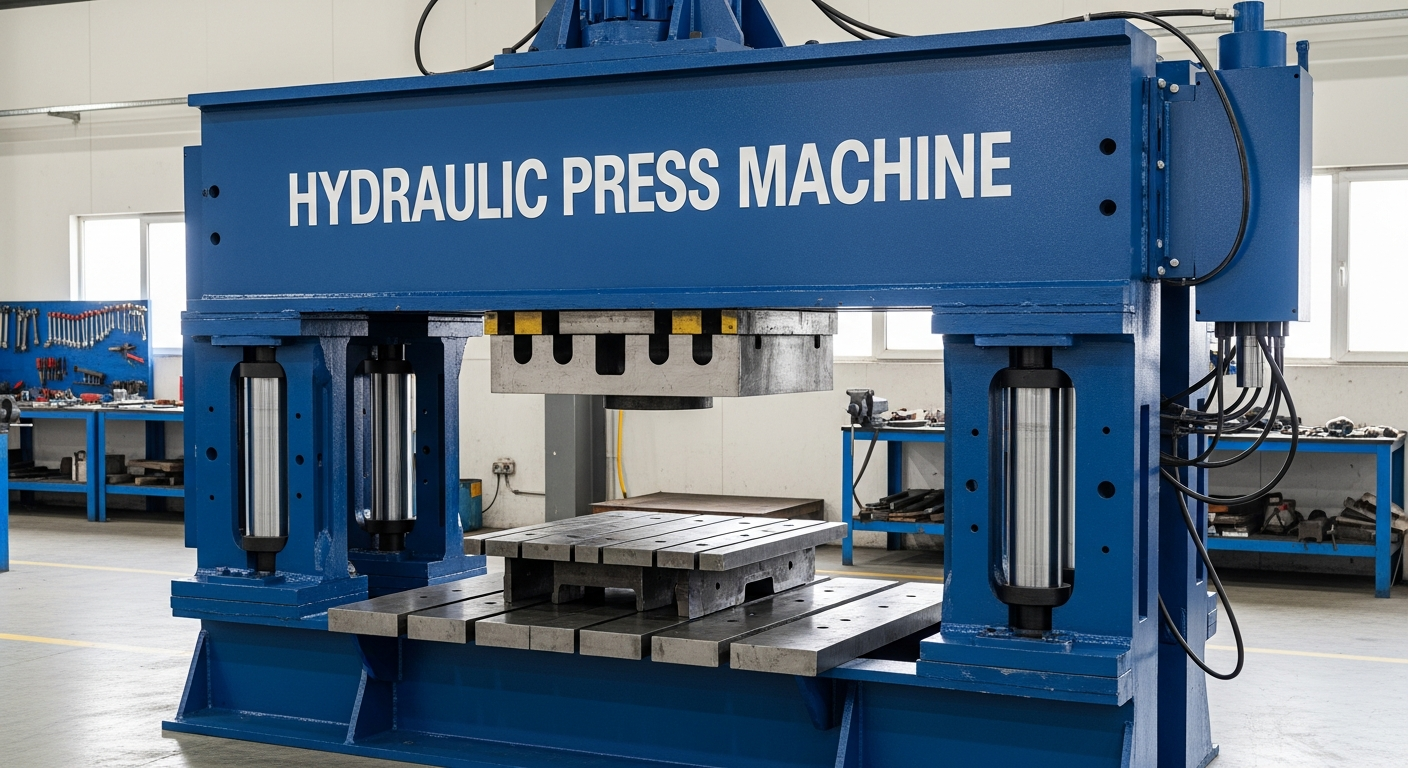
Industrial metal processing demands equipment that delivers consistent force, precision control, and reliable performance. The Hydraulic Press Machine has become the backbone of manufacturing operations across automotive, aerospace, construction, and heavy industries. These powerful machines transform raw materials into finished components through controlled pressure application, making them indispensable for modern fabrication facilities.
Understanding how to use a hydraulic press effectively, selecting the right configuration, and working with a trusted hydraulic press machine manufacturer directly impacts production quality and operational efficiency. This guide covers essential information about hydraulic press technology and applications.
Understanding Hydraulic Press Machine Technology
A hydraulic press machine generates force through hydraulic cylinders powered by pressurized fluid. Unlike mechanical presses that rely on flywheel energy, hydraulic systems provide consistent force throughout the entire stroke, offering superior control for metal forming, stamping, and assembly operations.
The fundamental principle follows Pascal’s law: pressure applied to confined fluid transmits equally in all directions. A small input force on the hydraulic pump creates amplified output force at the cylinder, enabling massive tonnage capacity from compact equipment. Modern hydraulic press machines generate forces ranging from a few tons to thousands of tons.
Contemporary designs incorporate sophisticated controls, safety systems, and automation features that maximize productivity while protecting operators. From simple manual controls to fully automated PLC systems, these machines adapt to diverse manufacturing requirements.
Types of Hydraulic Press Machines
H-Frame Hydraulic Press
The H-frame press features a robust frame structure resembling the letter H, providing exceptional rigidity and stability. This closed-frame configuration excels at handling heavy-duty applications where high tonnage and structural strength are critical. The design distributes force evenly, preventing frame deflection under maximum load.
H-frame hydraulic presses suit demanding applications requiring deep draw capabilities, extended stroke lengths, and heavy material forming. The rigid structure supports substantial tooling weight effectively, making these machines ideal for automotive stamping, metal forming dies, and structural component manufacturing. Manufacturers value H-frame designs for their durability and ability to maintain precision under continuous high-load conditions.
These hydraulic press machines incorporate adjustable dovetail guides capable of handling both axial and side thrust loads. Multiple speed options for approach, pressing, and return strokes significantly reduce cycle times while maintaining quality.
C-Frame Hydraulic Press
The C-frame press provides three-sided access to the work area, substantially simplifying part loading and unloading. The open-front design allows operators to position workpieces quickly from multiple angles, improving cycle times for high-volume production. C-frame construction suits applications where accessibility matters more than maximum tonnage capacity.
These compact hydraulic press machines fit into restricted spaces while maintaining excellent performance for assembly operations, punching, pressing, riveting, and light to medium forming tasks. The gap frame allows longer parts to extend beyond the machine bed, accommodating oversized components without requiring unnecessarily large equipment.
C-frame presses are available in various table sizes and throat depths to facilitate diverse job requirements. Despite their compact footprint, quality C-frame designs deliver reliable performance when properly maintained.
Deep Drawing Hydraulic Press
Deep drawing presses specialize in forming sheet metal into hollow shapes through controlled material flow. These machines feature cushion systems, blank holders, and precise speed control that prevent wrinkling and tearing during the drawing process. Deep drawing creates components like kitchen sinks, automotive fuel tanks, and industrial containers.
The hydraulic press machine design for deep drawing includes multiple cylinders that independently control blank holder pressure, drawing force, and material flow. This sophisticated control enables forming complex geometries with uniform wall thickness and minimal material waste. Variable speed capability allows gentle initial contact followed by controlled forming speeds that prevent material damage.
Servo Hydraulic Press
Servo presses combine hydraulic power with servo motor precision, offering programmable force curves and motion profiles. Unlike conventional hydraulic presses operating at fixed speeds, servo systems adjust speed and pressure throughout the stroke based on process requirements.
This advanced hydraulic press machine technology reduces energy consumption by 30-60% compared to traditional designs while improving forming quality. Servo control enables gentle contact with workpieces, preventing surface damage on sensitive materials. Manufacturers processing aluminum, high-strength steel, and composite materials benefit significantly from servo press capabilities.
Key Components of Hydraulic Press Machines
Hydraulic Power System
The hydraulic system comprises pump assemblies, control valves, hydraulic cylinders, fluid reservoir, and interconnecting lines. High-quality pumps generate consistent pressure while minimizing energy consumption. Variable displacement pumps adjust output based on demand, reducing power waste during idle periods.
Control valves regulate fluid flow to cylinders, determining press speed and force application. Proportional valves enable precise pressure modulation essential for applications requiring gentle forming or specific force curves. Safety valves protect systems from overpressure conditions.
Modern hydraulic press machine systems incorporate advanced filtration and temperature control for consistent performance. Accumulator systems store pressurized fluid for rapid response when required.
Frame Construction
Frame construction determines press performance, accuracy, and longevity. Premium hydraulic press machine manufacturer companies utilize finite element analysis to optimize frame geometry, ensuring adequate strength while minimizing weight. High-grade structural steel provides rigidity necessary to maintain dimensional accuracy under maximum tonnage.
Stress-relieved frames prevent distortion from thermal cycling and repeated loading. Precision-machined guide ways ensure ram alignment throughout the stroke, critical for maintaining tight tolerances on formed parts. Quality frame construction determines whether a press maintains accuracy after years of continuous operation.
Control Systems
Modern control systems transform basic hydraulic presses into sophisticated production equipment. Microprocessor-based controllers store multiple program settings, allowing quick changeovers between different parts. Touch screen interfaces simplify programming and provide real-time monitoring of pressure, position, and production counts.
PLC integration enables communication with manufacturing execution systems, automated material handling, and quality inspection equipment. Advanced controls incorporate load monitoring that adjusts parameters automatically based on actual process conditions.
How to Use a Hydraulic Press
Safety Considerations
Understanding how to use a hydraulic press safely represents the highest priority for any operation. Before operating any hydraulic press machine, operators must complete comprehensive safety training covering machine-specific hazards, emergency procedures, and proper operating techniques.
Safety guards prevent access to pinch points during operation. Two-hand controls ensure operators keep hands clear of danger zones. Light curtains and pressure-sensitive mats provide additional protection by stopping the press if anyone enters hazardous areas. Emergency stop buttons must be easily accessible and tested regularly.
Proper personal protective equipment includes safety glasses, steel-toed boots, and hearing protection. Loose clothing, jewelry, and long hair present entanglement hazards. Operators should never bypass safety devices or attempt repairs while equipment remains energized.
Operating Procedures
Learning how to use a hydraulic press effectively begins with understanding basic operations. Start by verifying hydraulic fluid levels and inspecting the machine for damage or leaks. Check that tooling is properly installed and secured before production.
Power on the hydraulic press machine and allow the system to reach operating temperature. Select the appropriate program or manually set pressure and speed parameters. Position workpieces correctly in the die, ensuring proper alignment to prevent tool damage and part defects.
Activate the press using designated safe controls. Monitor initial cycles carefully to verify correct operation and part quality. Adjust parameters as needed to achieve specified dimensions and surface finish.
Maintenance Requirements
Regular maintenance keeps hydraulic press machines operating reliably. Daily inspections should verify fluid levels, check for leaks, and examine safety devices. Clean the work area to prevent contamination.
Weekly maintenance includes lubricating guide ways and checking hydraulic filter conditions. Monthly service adds detailed inspection of hoses, fittings, and seals for wear. Annual maintenance requires comprehensive system evaluation including hydraulic fluid analysis.
Detailed maintenance records document service history and identify developing problems before failures occur. Scheduled maintenance costs far less than emergency repairs.
Industrial Applications of Hydraulic Press Machines
Automotive Manufacturing
Automotive production facilities consume significant hydraulic press machine capacity for stamping body panels, forming structural components, and assembling subassemblies. High-tonnage presses form door panels, hoods, and fenders, while smaller presses handle brackets and mounting hardware.
The shift toward electric vehicles creates new applications. Battery enclosures require precise forming of aluminum and high-strength steel. Electric motor housings demand tight tolerances achievable through controlled hydraulic pressing.
Aerospace Industry
Aerospace manufacturing demands extreme precision and quality documentation. Hydraulic press machines form aluminum and titanium components for aircraft structures, requiring consistent force application and comprehensive process monitoring. Composite material processing increasingly utilizes hydraulic presses for consolidation and curing operations.
Construction Equipment
Heavy construction equipment incorporates numerous pressed components in structures and systems. Thick steel plates formed into equipment frames require high-tonnage hydraulic press machines with deep draw capabilities. Manufacturers value reliability since production schedules directly impact delivery commitments.
Consumer Appliances
Consumer appliances contain numerous stamped metal components formed through hydraulic pressing. Washing machine drums, refrigerator panels, and oven enclosures originate as flat sheets transformed into functional components. High-volume manufacturing benefits from automated press systems.
Factors Affecting Hydraulic Press Machine Price in India
Tonnage Capacity
Hydraulic press machine price in India correlates directly with tonnage capacity. Machines generating higher forces require larger cylinders, more robust frames, and more powerful hydraulic systems. Small workshop presses rated at 50-100 tons cost significantly less than industrial presses generating 500-2000 tons.
Manufacturers must balance capacity needs with budget constraints. Oversized equipment wastes capital and floor space, while undersized presses cannot handle required applications.
Frame Configuration
Frame type significantly impacts pricing. C-frame designs generally cost less than H-frame configurations of equivalent tonnage due to simpler construction. However, application requirements often dictate frame selection regardless of cost differences.
Control Sophistication
Basic manual controls offer the lowest hydraulic press machine price in India but limit productivity. Programmable controls with touch screens and automation cost more initially but deliver value through improved efficiency and reduced labor requirements.
Advanced features like servo integration and network connectivity increase equipment costs substantially. Facilities operating multiple presses benefit from standardized controls that simplify training and maintenance.
Manufacturer Reputation
Established hydraulic press machine manufacturer in India companies command premium pricing based on proven reliability, quality construction, and comprehensive support. While lesser-known manufacturers may offer lower prices, total cost of ownership often favors premium brands through reduced maintenance and longer service life.
Quality manufacturers utilize superior components including name-brand hydraulic valves and industrial control systems. Precision manufacturing ensures proper alignment, directly impacting machine performance and longevity.
Selecting a Hydraulic Press Machine Manufacturer
Engineering Expertise
Leading hydraulic press machine manufacturer companies employ experienced engineers who understand metal forming principles, hydraulic systems, and control technology. This expertise manifests through design details that improve reliability, safety, and operator convenience.
Application engineering support helps customers select appropriate equipment specifications. Experienced manufacturers understand how different materials behave under forming operations and recommend optimal press configurations.
Manufacturing Quality
Premium hydraulic press machine manufacturer in India facilities maintain strict quality standards covering material selection, fabrication processes, and final testing. Precision machining, careful welding, and thorough inspection ensure equipment meets specifications.
Factory testing verifies hydraulic system performance, frame alignment, and control functionality before shipment. Load testing confirms tonnage capacity and structural integrity.
Support Services
Comprehensive support distinguishes exceptional hydraulic press machine manufacturer companies from basic suppliers. Installation assistance ensures proper setup. Operator training covers safe procedures, maintenance, and troubleshooting, maximizing equipment value.
Responsive technical support minimizes downtime when issues arise. Spare parts availability enables quick repairs. Preventive maintenance programs help customers maintain optimal press performance.
Conclusion
The hydraulic press machine remains essential for modern metal processing, offering controlled force application across countless manufacturing operations. From compact C-frame designs to massive H-frame systems, hydraulic presses adapt to diverse requirements while maintaining precision.
Understanding how to use a hydraulic press safely and effectively maximizes equipment value while protecting operators. Working with established hydraulic press machine manufacturer companies ensures access to proven technology, quality construction, and reliable support. While hydraulic press machine price in India varies significantly, focusing on total ownership costs delivers better long-term results.
Energymission stands as a trusted hydraulic press machine manufacturer in India offering comprehensive solutions including H-frame presses, C-frame presses, deep drawing presses, and servo press systems. Our engineering expertise, quality manufacturing, and customer support deliver exceptional value for manufacturers across India and worldwide.