
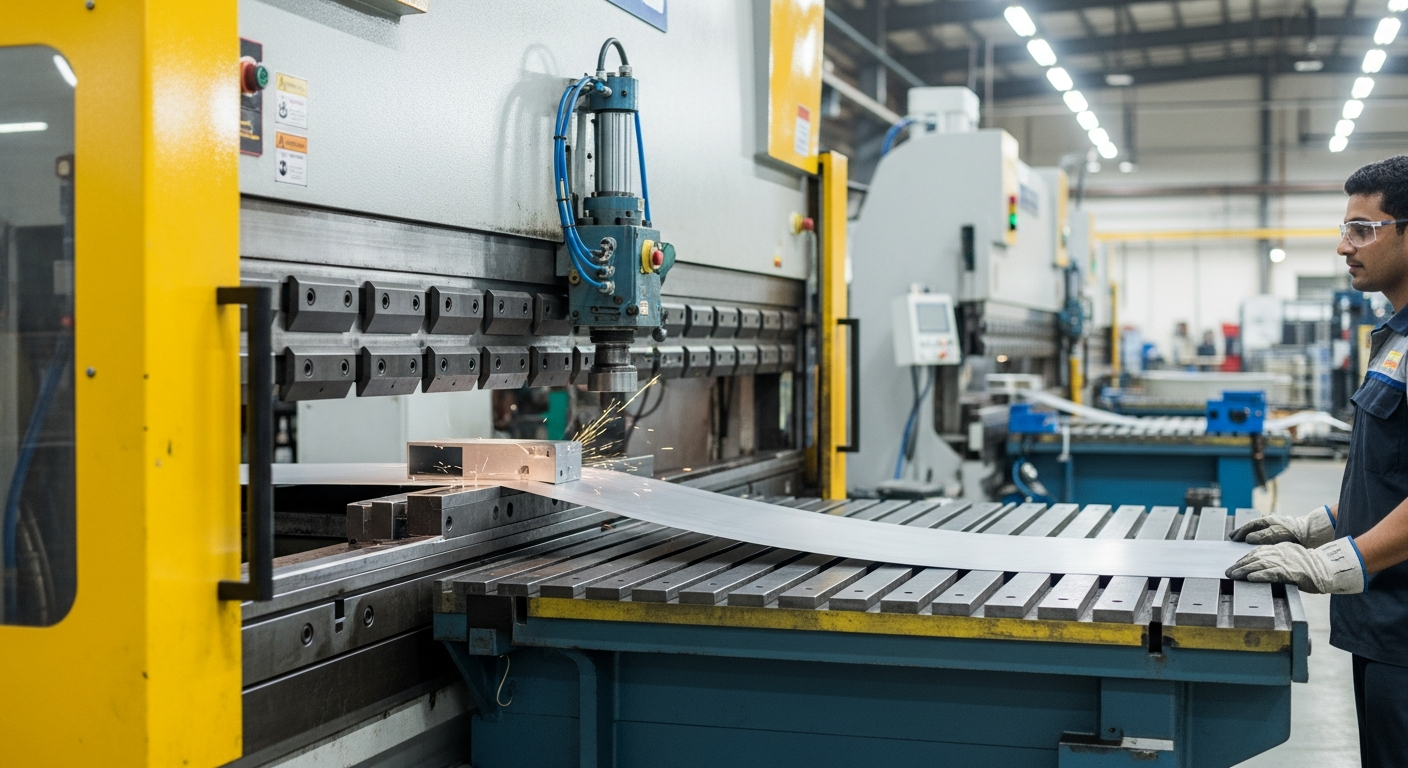
Metal fabrication industries rely heavily on precision bending equipment to transform flat metal sheets into functional components. Among these essential tools, the press brake stands out as a fundamental machine that shapes modern manufacturing. This comprehensive guide examines various aspects of this critical equipment, helping you understand its operation, classifications, and real-world uses.
What is a Press Brake?
A press brake is a machine tool designed to bend sheet metal and plate materials with precision. The equipment consists of a punch (upper tool) and die (lower tool) that work together to create accurate bends at specific angles. Metal fabricators across industries depend on this equipment for producing everything from simple brackets to complex enclosures.
The machine operates by clamping the workpiece between the punch and die, applying controlled force to achieve the desired bend angle. Modern variants incorporate advanced controls that allow operators to program multiple bends with consistent accuracy, making them indispensable in production environments.
Historical Development and Modern Evolution
Metal bending technology has progressed significantly over the past century. Early mechanical systems required substantial manual effort and offered limited precision. Today’s press brake machines feature CNC controls, servo-electric drives, and sophisticated back gauge systems that position materials automatically.
Leading press brake manufacturers like EnergyMission have integrated Industry 4.0 technologies, enabling remote monitoring, predictive maintenance, and data analytics. These advancements have transformed the equipment from simple bending tools into intelligent production systems.
Types of Press Brake Machines
Mechanical Press Brake
Mechanical variants use a flywheel system powered by an electric motor. The flywheel stores energy and releases it through a mechanical linkage system. These machines offer high-speed operation suitable for production runs and lower initial investment compared to hydraulic systems. However, they come with fixed stroke length that limits flexibility, making them best suited for repetitive operations with consistent material thickness.
Hydraulic Press Brake
Hydraulic press brake systems utilize hydraulic cylinders to generate bending force. Oil pressure drives the ram movement, providing variable stroke adjustment for different material thicknesses and precise force control throughout the bending cycle. These systems include overload protection mechanisms and work well for both light-gauge and heavy-plate applications with energy-efficient operation using modern proportional valves.
Hydraulic systems dominate industrial applications due to their versatility and control capabilities. Press brake suppliers report that hydraulic variants account for approximately 70% of new installations across manufacturing facilities worldwide.
Servo-Electric Press Brake
Servo-electric technology represents the latest evolution in bending equipment. These machines use servo motors and ball screws instead of hydraulic systems, delivering exceptional energy efficiency with 50-70% power savings compared to traditional hydraulic models. They require minimal maintenance since there’s no hydraulic oil involved, making them suitable for clean operation in sensitive environments. The precision positioning achieves repeatability under ±0.01mm, though the higher initial cost is offset by significantly lower operating expenses over the machine’s lifetime.
Pneumatic Press Brake
Pneumatic systems use compressed air to generate bending force. These machines work well for light-duty applications under 25 tons, making them ideal for educational institutions, small workshops, and simple bending tasks with thin materials where clean operation is required.
Looking for the right bending solution for your facility? Contact EnergyMission today to discuss your specific requirements with our technical team.
Working Principle of Press Brake Machines
Understanding the operational mechanics helps operators achieve optimal results. The bending process involves several physical principles that determine the final product quality.
Force Application
The machine’s ram moves downward, pressing the punch into the sheet metal positioned on the die. The applied tonnage must overcome the material’s yield strength to create permanent deformation. Required tonnage depends on material type and grade, thickness of the workpiece, length of the bend, die opening width, and desired bend angle. Calculating the correct tonnage prevents machine damage and ensures quality bends.
Bend Angle Formation
As the punch descends into the die opening, the metal bends around the punch radius. The final angle depends on punch penetration depth, material springback characteristics, die geometry, and whether you’re using bottoming or air bending technique. Air bending requires less tonnage and allows multiple angles with the same tooling, while bottoming produces more consistent results with less springback variation.
Springback Compensation
All metals exhibit springback the tendency to partially return to their original shape after bending. Experienced operators account for this phenomenon by overbending to compensate for springback, using material-specific bend deduction charts, programming CNC controllers with springback values based on material testing, and adjusting parameters based on real-world results from sample pieces.
Key Components and Their Functions
Ram and Frame
The ram holds the punch tooling and moves vertically to apply bending force. The frame must withstand full tonnage without deflection to maintain accuracy. Modern frames use heavy-duty steel construction with computer-optimized geometry for stress distribution. Crowned ram designs compensate for deflection across the working length, while precision-ground guideways ensure smooth operation throughout the machine’s service life.
Back Gauge System
The back gauge positions material accurately before bending, which is critical for maintaining tight tolerances on production parts. Advanced systems feature multi-axis CNC control covering X, R, and Z axes for complex positioning requirements. Automatic positioning between bend sequences reduces cycle time, while sheet support fingers prevent sagging on large workpieces. Programmable movement synchronized with ram operation creates efficient workflows.
Control System
Control systems range from simple manual controls to sophisticated CNC platforms that transform machine operation. Modern controllers offer graphical programming interfaces that simplify setup, 3D bend simulation to verify programs before production, tool libraries with automatic setup parameters, production monitoring and reporting capabilities, and network connectivity for data exchange with enterprise systems.
Tooling System
Interchangeable tooling allows one press brake machine to handle diverse applications across different industries. Standard tooling includes various punch profiles such as acute, gooseneck, radius, and offset configurations. Die blocks with different V-opening widths accommodate various material thicknesses, while quick-change tool holders enable fast setup between jobs. Specialized tools for hemming, curling, and forming extend machine capabilities beyond simple bending operations.
Industrial Applications Across Sectors
Automotive Manufacturing
Automotive facilities use press brake equipment extensively for chassis components and brackets, body panels and reinforcements, exhaust system parts, and interior support structures. High-volume operations require machines with automatic tool changers and part handling systems. Repeatability and consistency are critical for meeting automotive quality standards that demand tight tolerances and minimal variation between parts.
Aerospace Industry
Aerospace applications demand exceptional precision due to safety requirements and performance specifications. Press brake machines in this sector handle aircraft skin panels, structural ribs and stringers, engine nacelle components, and interior cabin elements. Aerospace-grade equipment features precision controls with positioning accuracy under 0.02mm, complete traceability systems for quality documentation, and qualification for working with exotic alloys like titanium and Inconel that require specialized bending knowledge.
Construction and Architecture
Construction metal fabricators depend on these machines for structural steel angles and channels, roofing and cladding profiles, staircase components, and decorative architectural elements. Large-capacity machines handle heavy plate up to 25mm thickness and lengths exceeding 6 meters, which is necessary for structural applications where strength and dimensional accuracy affect building integrity.
Electronics and Appliances
Consumer electronics manufacturing requires precision bending of thin materials for computer chassis and enclosures, appliance panels and doors, HVAC components, and electronic equipment housings. These applications typically use smaller-tonnage machines with fine resolution controls that can maintain tolerances on thin-gauge materials without causing deformation or surface damage.
General Fabrication
Job shops and custom fabricators use versatile press brake equipment for custom brackets and supports, ventilation ductwork, agricultural equipment components, and industrial machinery parts. Flexibility and quick changeover capabilities are priorities for shops handling diverse workpieces where setup time directly impacts profitability and the ability to accept varied work.
Ready to upgrade your metal fabrication capabilities? Browse our complete range of press brake solutions designed for various industries and applications.
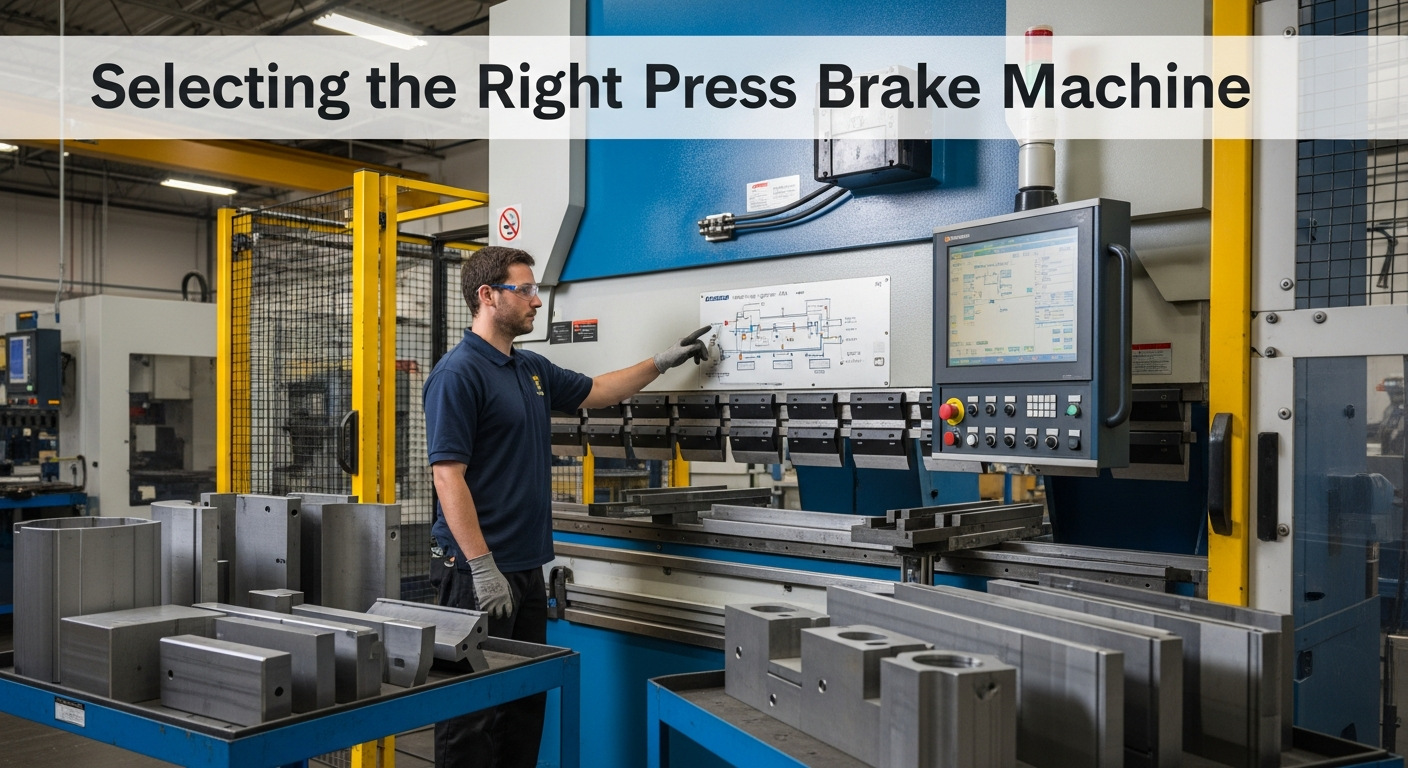
Selecting the Right Press Brake Machine
Tonnage Capacity
Calculate required tonnage using the formula: Tonnage = (Material Thickness² × Material Constant × Bend Length) / Die Width. Material constants vary by type, with mild steel at 1.35, stainless steel at 2.0, and aluminum at 0.8. Select a machine with 20-30% capacity reserve for safety and longevity, which also allows for future expansion into thicker materials or longer bends.
Working Length
Choose working length based on your largest typical workpiece, plus 200-300mm for tooling clearance and positioning flexibility. Common lengths range from 1000mm to 6000mm depending on application requirements. Longer machines cost more but provide flexibility for handling oversized parts without repositioning, which saves time and improves accuracy on large components.
Control System Requirements
Match the control system to your application complexity for optimal efficiency. Manual controls suit simple, repetitive work where programming isn’t necessary. NC controls handle moderate complexity with programmable back gauge positioning. CNC systems manage complex parts requiring multiple bends and angles with automatic sequencing. Fully automated solutions serve high-volume production with minimal operator intervention, integrated material handling, and quality verification systems.
Brand Reputation and Support
Partner with established press brake manufacturers who provide comprehensive training programs that get operators productive quickly, readily available spare parts to minimize downtime, responsive technical support when issues arise, and a proven track record in your specific industry. EnergyMission offers complete press brake solutions backed by extensive application knowledge and reliable after-sales service that keeps your equipment running at peak performance.
Safety Considerations
Operating this equipment requires adherence to safety protocols that protect workers while maintaining productivity. Modern machines incorporate light curtains or laser guards that stop the ram when interrupted, two-hand controls preventing hand entry during operation, and emergency stop buttons within easy reach. Proper guarding of pinch points, regular maintenance and safety inspections, and comprehensive operator training on safe procedures create a safe working environment. Modern machines incorporate multiple safety layers that protect operators while maintaining productivity levels required in competitive manufacturing environments.
Maintenance and Longevity
Proper maintenance extends machine life and maintains accuracy over years of operation. Daily tasks include checking hydraulic oil levels and condition, inspecting tooling for damage or wear, verifying back gauge positioning accuracy, and cleaning work surfaces to remove debris. Weekly maintenance involves lubricating moving components per manufacturer specifications and checking hydraulic hose conditions for leaks or damage.
Monthly maintenance requires verifying hydraulic pressure settings, checking ram parallelism and adjusting if needed to prevent uneven bending, inspecting seals for leakage that could cause performance issues, and reviewing control system error logs. Annual maintenance includes complete hydraulic system service, precision measurement of critical dimensions to verify machine geometry, updating control software as needed, and professional inspection by qualified technicians who can identify potential issues before they cause failures.
Future Trends in Press Brake Technology
The metal fabrication equipment sector continues advancing with smart manufacturing integration where connected machines share production data with enterprise systems, enabling real-time production monitoring and automatic job scheduling. Advanced materials processing capabilities handle ultra-high-strength steels used in automotive lightweighting, composite metal panels for aerospace applications, pre-coated materials requiring surface protection, and advanced alloys with unique bending characteristics.
Automation and robotics improve productivity through robotic material loading and unloading, automatic tool changing systems, vision systems for part verification, and collaborative robots working alongside operators. Energy efficiency improvements include hybrid systems combining hydraulic and electric advantages, regenerative systems that recover energy during operation, optimized hydraulic circuits reducing power consumption, and lightweight machine designs requiring less energy to operate.
Want to future-proof your fabrication facility? Speak with our application specialists to learn about the latest technology in metal bending equipment.
Frequently Asked Questions (FAQ)
1. What is the difference between a press brake and a brake press?
A press brake and brake press refer to the same machine tool used for bending sheet metal. The term “press brake” is the more commonly used and technically correct terminology in the metal fabrication industry. Both terms describe equipment that uses a punch and die to create precise bends in metal sheets and plates.
2. How do I calculate the tonnage needed for my press brake?
Calculate tonnage using this formula: Tonnage = (Material Thickness² × Material Constant × Bend Length) / Die Width. The material constant varies: mild steel is 1.35, stainless steel is 2.0, and aluminum is 0.8. For example, bending 3mm mild steel over 1000mm length with an 8x die opening requires approximately 21 tons. Always add 20-30% safety margin when selecting your press brake machine.
3. What is the minimum bend radius for sheet metal?
The minimum bend radius depends on material type, thickness, and grain direction. As a general rule, the minimum inside bend radius should be at least equal to the material thickness for most metals. Softer materials like aluminum can achieve tighter radii, while harder materials like stainless steel require larger radii to avoid cracking. Consult material-specific bend charts for precise values.
4. How often should I service my hydraulic press brake?
Daily checks should include oil levels and tooling inspection. Weekly maintenance covers lubrication and hose inspections. Monthly tasks include pressure verification and ram parallelism checks. Annual professional service should include complete hydraulic system maintenance, precision measurements, and control system updates. Following this schedule extends machine life and maintains accuracy.
5. Can I bend stainless steel on a press brake?
Yes, press brake equipment can bend stainless steel, but it requires more tonnage than mild steel due to higher yield strength. Stainless steel also exhibits greater springback, requiring overbending to achieve desired angles. Use appropriate tooling with adequate radius to prevent surface cracking, and calculate tonnage using the stainless steel material constant of 2.0 in the bending formula.
Request a detailed quotation for high-performance press brake equipment tailored to your specifications.