
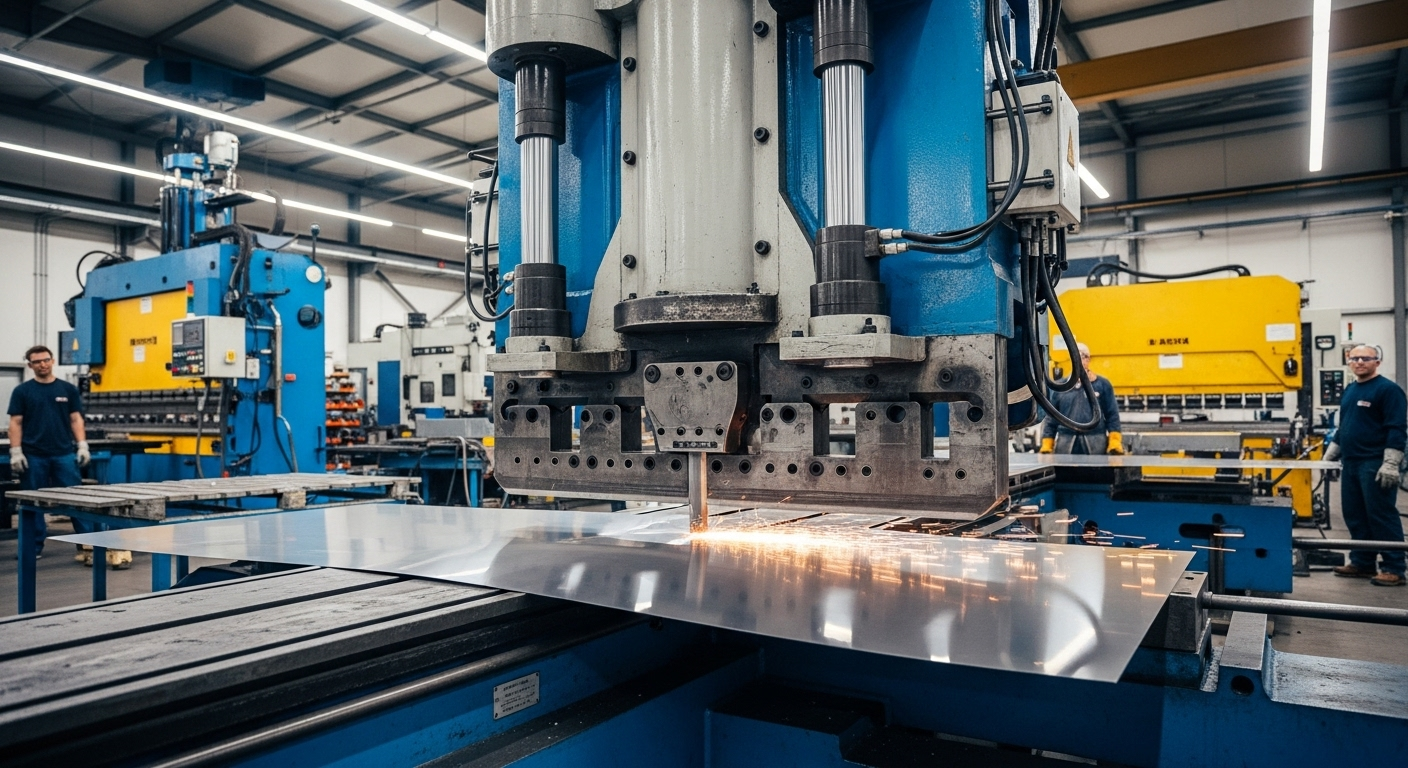
In today’s metal fabrication industry, precision, productivity, and durability define the success of every manufacturing operation. Among the various tools that enable such efficiency, the Hydraulic Shearing Machine stands as an essential piece of equipment for stainless steel bending manufacturers. This powerful machine plays a vital role in cutting and shaping stainless steel sheets with remarkable accuracy, preparing them for further bending, forming, and assembly processes.
Whether you are involved in sheet metal fabrication, construction, or heavy machinery production, hydraulic shearing equipment ensures smooth workflow and consistent results. This blog explains the working principle, construction, and benefits of hydraulic shearing machines, emphasizing their importance in stainless steel processing and industrial manufacturing.
Understanding the Role of a Hydraulic Shearing Machine
A Hydraulic Shearing Machine is designed to cut metal sheets by applying a controlled hydraulic force through moving blades against fixed ones. It provides clean, accurate, and straight cuts, making it an ideal solution for stainless steel fabrication where precision is critical.
Unlike mechanical shears that rely on flywheels and mechanical leverage, hydraulic shears use hydraulic cylinders for motion, which allows adjustable cutting pressure, higher safety, and smoother performance. For stainless steel bending manufacturers, this flexibility ensures minimal material deformation and optimal edge quality, two crucial aspects in high-quality bending operations.
Working Principle of Hydraulic Shearing Machines
The operation of a Hydraulic Shearing Machine revolves around the simple yet powerful principle of applying controlled hydraulic pressure to a movable blade assembly. Here’s how it functions:
- Hydraulic Pressure Generation:
A hydraulic pump drives fluid through cylinders, generating pressure that moves the ram or upper blade.
- Sheet Positioning:
The stainless steel sheet is clamped firmly in place using hydraulic hold-downs to prevent movement during cutting.
- Cutting Action:
As the upper blade descends, it presses against the lower stationary blade, applying enough shear force to slice through the metal cleanly.
- Return Stroke:
Once the cut is complete, the hydraulic system retracts the ram smoothly, readying the machine for the next operation.
This controlled hydraulic system provides not only power but also precision, ensuring each cut is uniform and burr-free. For stainless steel bending applications, consistent shearing quality directly translates into better bending results and longer tool life.
Key Components of a Hydraulic Shearing Machine
A Hydraulic Shearing Machine is a combination of mechanical precision and hydraulic control. Its performance depends on several major components:
- Frame and Bed: The robust structure that supports the machine and absorbs vibrations.
- Blade Assembly: High-grade alloy or hardened steel blades designed to cut through various sheet thicknesses.
- Hydraulic Cylinders: Convert hydraulic pressure into mechanical movement.
- Hold-Down Clamps: Secure the sheet metal firmly during operation.
- Back Gauge System: Ensures consistent cutting dimensions.
- Control Panel: Provides operator control over cutting length, angle, and pressure.
These components work together to ensure stability, accuracy, and repeatability during each operation qualities that make hydraulic shears indispensable in Stainless Steel Bending Manufacturing .
Advantages of Using Hydraulic Shearing Machines in Stainless Steel Bending
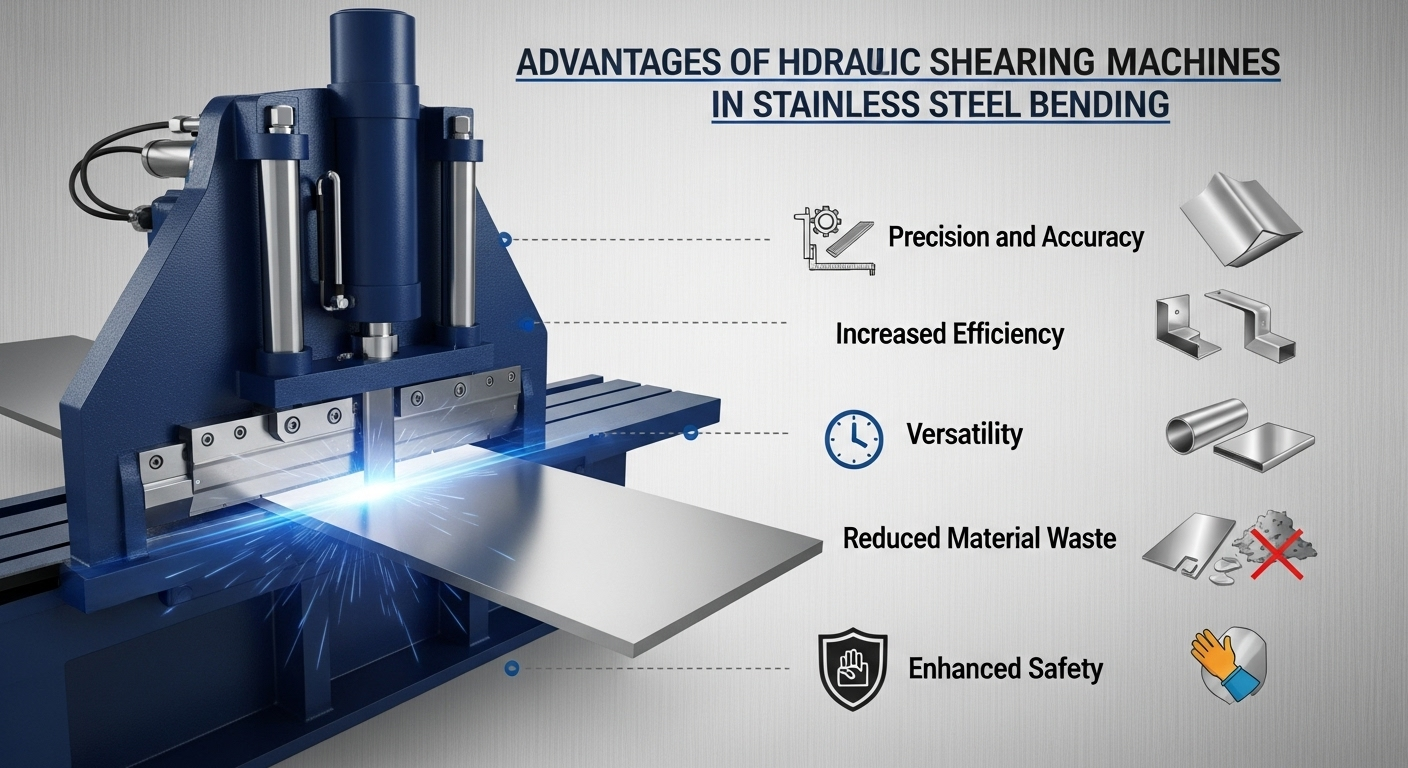
Manufacturers dealing with stainless steel often face challenges like material toughness, tool wear, and precise dimensional requirements. Hydraulic shearing machines offer several benefits to address these challenges:
1. Superior Cutting Accuracy
The hydraulic mechanism ensures consistent pressure across the entire cutting length, minimizing deviations and ensuring clean, straight edges ideal for bending and forming operations.
2. Adjustable Cutting Pressure
Operators can control the hydraulic pressure based on sheet thickness and hardness, preventing excessive stress or edge cracking in stainless steel sheets.
3. Reduced Noise and Vibration
Compared to mechanical shears, hydraulic shearing machines produce significantly less vibration and noise, enhancing workplace comfort and extending component life.
4. Safety and Automation
Modern hydraulic shears include safety guards, emergency stops, and programmable logic control (PLC) systems, ensuring safe and efficient operation.
5. High Productivity
Fast cycle times and automatic back gauge systems allow for continuous, precise production an essential advantage for Hydraulic Shearing Machine manufacturers serving high-volume stainless steel industries.
6. Long Blade Life
Because of controlled pressure and smooth motion, blades experience less wear and require fewer replacements, reducing long-term maintenance costs.
Applications of Hydraulic Shearing Machines
Hydraulic shearing machines find applications across a broad range of industries, particularly where stainless steel and other metals are extensively used:
- Stainless Steel Fabrication Units
- Automotive and Aerospace Industries
- Kitchen Equipment Manufacturing
- Shipbuilding and Heavy Engineering
- Construction and Infrastructure Projects
- Electrical Enclosures and Panels
In each of these applications, hydraulic shearing ensures smooth and dimensionally accurate cuts, which are crucial before bending, forming, or welding stages.
Types of Hydraulic Shearing Machines
Hydraulic shears are available in various configurations to meet different production requirements. Below are some of the most commonly used types:
1. Swing Beam Shear
Uses a pivoting upper blade beam, suitable for medium-duty cutting operations. It’s reliable, cost-effective, and widely used in general stainless steel fabrication.
2. Guillotine Shear
Provides linear vertical blade movement for heavy-duty operations. It ensures extremely precise cuts, ideal for thick stainless steel sheets.
3. CNC Hydraulic Shear
Incorporates computer numerical control for automated precision cutting. These models are popular among advanced Hydraulic Shearing Machine suppliers who cater to industries demanding consistent batch production.
Hydraulic Shearing Machine in Stainless Steel Bending Process
In stainless steel bending, the preparation of material edges and sheet dimensions is critical. Any imperfection in shearing can affect the bending radius, surface finish, and final product quality. Hydraulic shears ensure that each cut sheet meets the exact specifications required for downstream bending machines.
Key contributions include:
- Smooth Edges: Prevent cracks during bending.
- Accurate Dimensions: Ensure precise fit in press brakes or roll bending machines.
- Consistent Thickness Cuts: Maintain bending uniformity.
- Material Integrity: Avoid microstructural damage due to controlled shearing pressure.
By delivering such consistency, hydraulic shearing machines enhance the productivity and reliability of stainless steel fabrication lines.
Selecting the Right Hydraulic Shearing Machine
When choosing a Hydraulic Shearing Machine for stainless steel applications, several parameters should be evaluated:z
- Cutting Capacity (Thickness × Length):
Ensure the machine can handle your maximum sheet dimensions.
- Blade Quality and Material:
Choose high-carbon or alloy steel blades for durability against stainless materials.
- Rake Angle and Clearance Adjustment:
Adjustable settings help achieve cleaner cuts with minimal distortion.
- Control System:
Modern PLC or CNC controls enhance precision, repeatability, and automation.
- Build Quality and After-Sales Support:
Opt for reputable Hydraulic Shearing Machine manufacturers and suppliers known for reliability, spare availability, and technical support.
Maintenance and Safety Considerations
Routine maintenance is vital to keep the hydraulic shear functioning efficiently. Manufacturers recommend:
- Regular inspection of hydraulic oil levels and filter conditions.
- Checking blade alignment and sharpness periodically.
- Cleaning the back gauge and clamps after each operation.
- Monitoring the pressure system to prevent leakage or pressure loss.
- Ensuring safety interlocks and emergency stops are functioning correctly.
Following these steps prolongs equipment life and ensures consistent, safe operation in high-demand industrial environments.
Future of Hydraulic Shearing in Stainless Steel Fabrication
With ongoing advancements in automation and digital control systems, hydraulic shearing technology is evolving rapidly. Integration of CNC systems, IoT-enabled diagnostics, and servo-hydraulic drives are making shearing operations smarter and more efficient. These innovations allow Hydraulic Shearing Machine suppliers to deliver equipment that offers better precision, reduced downtime, and lower energy consumption, perfectly aligning with modern manufacturing needs.
As industries increasingly rely on stainless steel due to its corrosion resistance and strength, the demand for efficient shearing systems will continue to rise. Manufacturers adopting these next-generation solutions will be better positioned for high-quality, sustainable production.
Conclusion
A Hydraulic Shearing Machine is a cornerstone of stainless steel fabrication. Its ability to deliver precise, burr-free, and consistent cuts ensures that every bending or forming process starts on a strong foundation. From small-scale workshops to large manufacturing plants, the machine’s versatility, safety, and accuracy make it indispensable.
For every Hydraulic Shearing Machine manufacturer and supplier, continuous improvement, precision engineering, and customer-focused design remain the keys to delivering superior solutions for stainless steel bending and beyond.