
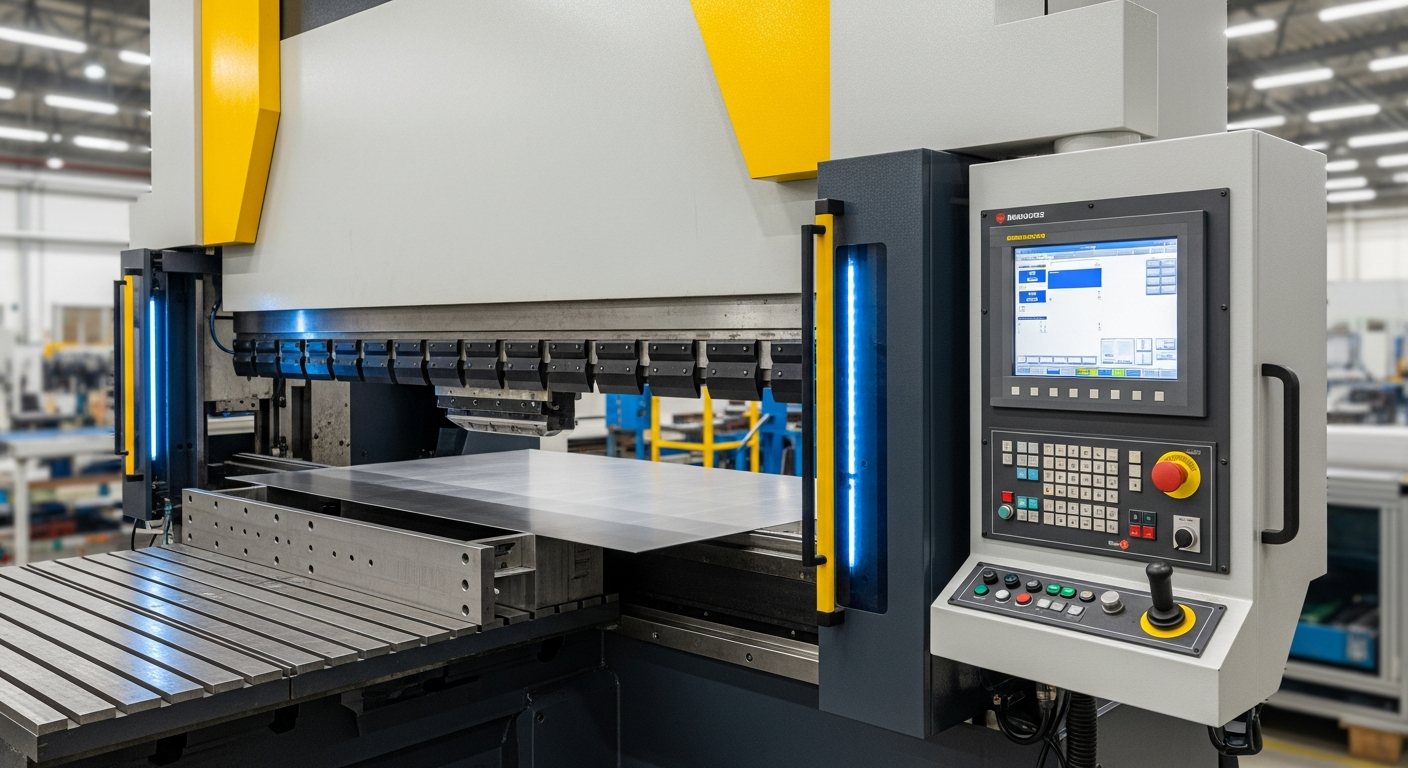
Metal fabrication has undergone tremendous transformation over the past two decades. What once required skilled craftsmen working with manual equipment now demands computerized systems capable of delivering consistent results at high speeds. The shift from manual to automated bending represents more than technological advancement it reflects changing customer expectations for precision, faster delivery times, and competitive pricing.
A CNC bending machine stands at the center of this transformation. These automated systems combine hydraulic power with computer control to execute complex bending sequences with minimal human intervention. The technology eliminates many variables that traditionally affected part quality, from operator skill variations to environmental factors like temperature changes affecting material properties.
Understanding how automated bending technology works, what capabilities different systems offer, and how to select appropriate equipment helps manufacturers maintain competitive advantage in demanding markets. This guide provides comprehensive information about CNC bending equipment, from basic concepts to advanced selection criteria.
Understanding CNC Bending Technology
Computer numerical control revolutionized manufacturing by replacing manual machine operation with programmed instructions. In bending applications, the CNC system manages every aspect of the forming process. The operator programs part geometry, material specifications, and tooling information once. The machine then executes the complete bending sequence automatically, positioning material accurately and applying precise force to achieve specified angles.
Modern CNC bending machine systems incorporate multiple feedback loops monitoring critical parameters. Position encoders track ram location with 0.01mm resolution. Pressure sensors verify hydraulic force application. Angle measurement systems check actual bend angles against programmed values. When the system detects deviations, it adjusts parameters in real-time to maintain accuracy.
This closed-loop control delivers consistency impossible with manual methods. Human operators introduce variables fatigue affects judgment, different operators interpret specifications differently, and manual measurements contain inherent errors. Automated systems eliminate these variables, producing identical parts regardless of when production occurs or who loads material.
Types of CNC Bending Equipment from Leading Suppliers
Advanced CNC Press Brake Systems
Working with an experienced CNC bending machine supplier provides access to the latest press brake technology. These machines represent the most versatile bending equipment available, handling everything from thin sheets to thick plates across materials including steel, stainless steel, aluminum, and specialized alloys.
The Energymission CNC press brake range includes multiple series designed for specific applications. Each series targets particular market segments based on production requirements, accuracy needs, and budget constraints.
Optima series machines deliver premium performance for demanding applications. These systems feature servo-hydraulic technology reducing energy consumption by 45-50% compared to conventional equipment. Beam speeds reach 220mm/sec during rapid positioning, then slow to controlled rates during actual bending. The CYBELEC CybTouch 8PS controller provides intuitive operation through a large touchscreen interface supporting 3D part visualization and offline programming.
The Optima series includes comprehensive safety features meeting international standards. Laser safety systems create virtual zones around danger areas, immediately stopping operation if obstructions are detected. Light curtains provide additional protection during material loading and unloading. Emergency stop buttons mounted at multiple locations enable rapid shutdown when needed.
For manufacturers requiring exceptional precision, Splendid series equipment maintains angle accuracy within ±0.5 degrees across the entire bending length. Frame construction uses ultrasonically tested IS:2062 grade steel machined on floor boring equipment for single-reference accuracy. This precision machining minimizes frame deflection under load, critical for maintaining consistent bend angles on long workpieces.
The Splendid series features quick-release clamp systems allowing rapid tool changes. Operators swap tooling in minutes rather than hours, reducing setup time when switching between jobs. This capability proves particularly valuable for job shops handling varied work requiring frequent tool changes.
Production-Focused Solutions
High-volume manufacturing demands equipment optimized for throughput without sacrificing quality. The Efficient series balances speed with precision, featuring rapid cycle times that increase daily production capacity. Fast approach speeds reduce non-productive time between bends, while controlled bending speeds ensure accuracy during critical forming operations.
These machines incorporate automatic tool recognition systems. Sensors read coded information from punch and die sets, adjusting bending parameters automatically. This eliminates manual data entry, reducing setup errors and further decreasing changeover time between jobs.
Large-Scale Fabrication Systems
Some applications require bending capacity exceeding standard equipment limitations. Tandem and Tridem configurations synchronize multiple machines to function as a single unit. The master controller coordinates all machines, ensuring synchronized movement and pressure application. This technology enables bending of sheets up to 20 meters long with accuracy matching smaller equipment.
Tandem systems prove essential for industries including shipbuilding, bridge construction, and large structural fabrication. The ability to handle oversized workpieces eliminates welding seams that would otherwise be required when using smaller equipment.
Heavy-Duty Industrial Equipment
Manufacturing involving thick materials or requiring exceptional force needs specialized equipment. A reputable CNC bending machine supplier offers heavy-duty options designed for demanding applications. The Magnum series provides tonnage capacities suitable for bending heavy plate. Reinforced frames withstand extreme forces without deformation, while advanced hydraulic systems maintain consistent pressure throughout the bending cycle.
These machines include automatic crowning systems compensating for frame deflection. Heavy bending loads cause even rigid frames to flex slightly. Without compensation, this deflection results in inconsistent bend angles across the workpiece width. Hydraulic crowning systems apply counter-pressure along the bed, calculated based on material thickness, bending length, and applied tonnage.
Compact Precision Equipment
Not all operations require large industrial equipment. The Prudent model delivers full CNC capability in a compact design suitable for smaller workshops or specialized applications. Despite reduced size, the machine maintains accuracy and automation features of larger units. This makes it ideal for businesses with space constraints or those focusing on smaller parts.
Entry-Level Automated Systems
Companies transitioning from manual to automated operation can start with numerical control systems. NC Press Brake (Front Cylinder) and Rear Cylinder configurations provide digital positioning control at lower investment levels than full CNC systems. These machines offer significant improvements over manual equipment while providing a pathway toward complete automation.
NC systems include digital displays showing ram position and backgauge location with 0.1mm resolution. While lacking the programming capabilities of full CNC systems, they eliminate guesswork and manual measurement, improving consistency substantially.
Traditional Hydraulic Options
Hydraulic press brake equipment remains relevant for specific applications. Modern hydraulic systems incorporate proportional valves and pressure sensors enabling precise control. When combined with CNC interfaces, these machines provide reliable bending performance across diverse applications at competitive prices.
Specialized Applications
Electrical manufacturing requires unique equipment capabilities. A CNC busbar bending machine handles copper and aluminum busbars used in electrical distribution systems. These specialized machines feature tooling designed specifically for bending conductors without damaging surface finish or compromising electrical properties. Precise angle control ensures proper fit in electrical enclosures, critical for maintaining safety standards.
Key Features to Evaluate from Your CNC Bending Machine Supplier
Control System Capabilities
The controller determines how easily operators can program complex parts and manage production. Modern systems feature graphical interfaces displaying 3D part representations. Operators visualize bending sequences before execution, identifying potential problems including tool collisions or material interference.
Touchscreen interfaces accept inputs through familiar gestures. Menu structures follow logical hierarchies minimizing steps needed to access functions. Context-sensitive help provides guidance when operators encounter unfamiliar situations. These user-friendly features reduce training time and programming errors.
Multi-Axis Positioning
Advanced CNC bending machine systems manage up to six axes simultaneously. Y1 and Y2 axes control ram descent on each side, enabling crowned bending when required. X-axis positions backgauge depth, while R-axis rotation angles backgauge fingers for complex geometries. Z1 and Z2 axes move individual fingers independently, allowing offset positioning for parts requiring multiple bends at different locations.
This multi-axis capability eliminates manual adjustments between bends. The operator programs all movements once, then the machine executes the complete sequence automatically. Parts requiring twenty separate bends complete as quickly as single-bend operations, with identical accuracy on each bend.
Safety Systems
Contemporary equipment incorporates comprehensive safety features protecting operators while maintaining productivity. Laser scanners create virtual safety zones around danger areas. When systems detect obstructions, they immediately halt machine movement. Light curtains mounted in front of bending areas provide additional protection, stopping operation if hands or other objects enter danger zones during bending cycles.
Two-hand controls require operators to use both hands for machine activation, keeping hands away from pinch points. Emergency stop mechanisms halt operation within milliseconds. These safety features meet international standards while allowing productive operation.
Energy Efficiency
Servo-hydraulic technology dramatically reduces power consumption compared to conventional systems. Servo motors run only when hydraulic pressure is needed, unlike traditional pumps operating continuously. This intermittent operation cuts energy consumption by 40-50%, reducing operating costs while supporting sustainability goals.
Lower energy consumption provides additional benefits beyond cost savings. Reduced heat generation means hydraulic oil maintains more stable temperatures. This stability improves accuracy by eliminating thermal expansion variations affecting dimensions.
Benefits of Partnering with an Experienced CNC Bending Machine Supplier
Access to Advanced Technology
Established suppliers invest continuously in research and development, incorporating latest advancements into product lines. Energymission, as a leading CNC press brake machine manufacturer, utilizes premium components from European suppliers including HAWE (Germany) and ATOS (Italy) for servo-hydraulic systems. Controllers come from industry leaders like CYBELEC (Switzerland) and ESA (Italy), providing proven reliability and intuitive operation.
This commitment to quality components distinguishes reputable manufacturers from companies using inferior parts. While premium components increase initial costs, they deliver superior long-term value through reliability and performance.
Comprehensive Support Services
Reputable suppliers provide extensive support extending beyond initial sale. Energymission maintains comprehensive spare parts inventory ensuring rapid delivery when replacements are needed. Their technical support team offers telephone assistance, remote diagnostics, and on-site service when required.
Training programs help customers maximize equipment capabilities. Comprehensive operator training covers basic operation, programming techniques, and routine maintenance. Advanced training addresses complex applications, offline programming, and troubleshooting. This education ensures operators use equipment effectively from day one.
Customization Capabilities
Established manufacturers offer equipment customization matching specific requirements. Standard models serve many applications, but some situations demand modified configurations. Reputable CNC bending machine supplier companies work with customers to develop customized solutions addressing unique needs.
Customization might include extended bending lengths, increased tonnage capacity, specialized tooling, or integrated automation. The ability to modify equipment ensures optimal fit for specific applications rather than forcing operations to adapt to standard equipment limitations.
Quality Assurance
Leading manufacturers implement rigorous quality control throughout production. Components receive individual inspection before assembly. Completed machines undergo comprehensive testing verifying performance specifications. Documentation accompanies each machine detailing inspection results and test data.
This quality focus ensures customers receive equipment meeting promised specifications. Problems discovered before delivery prevent costly failures after installation.
Selecting the Right CNC Bending Machine Supplier
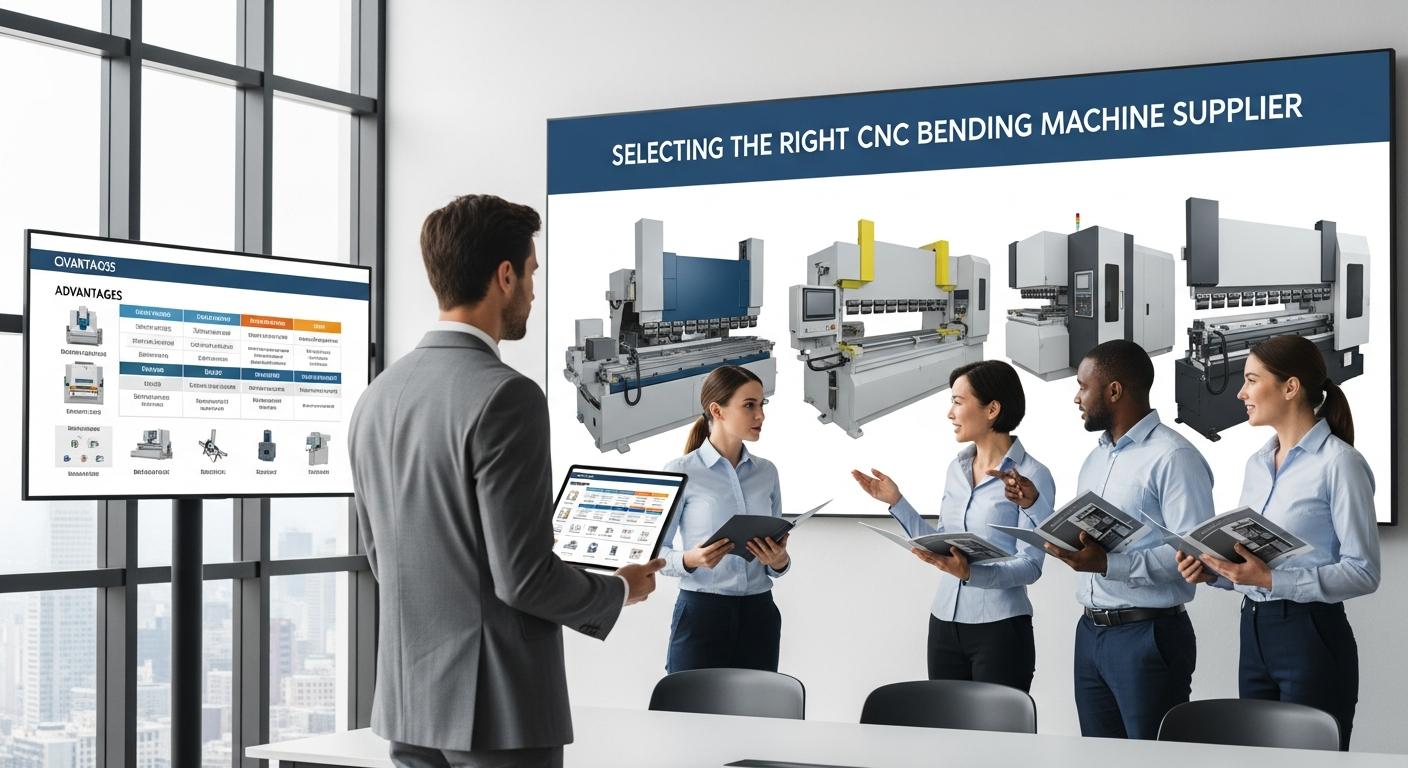
Evaluate Manufacturing Capabilities
Research supplier manufacturing facilities and capabilities. Established companies with comprehensive manufacturing infrastructure produce higher-quality equipment. Energymission’s 260,000 square foot facility includes advanced machining centers, assembly areas, and testing facilities. This scale enables investments in technology and quality control impossible for smaller operations.
In-house component manufacturing provides better control over quality and delivery schedules. Suppliers dependent on external sources for critical components face quality consistency challenges and supply chain disruptions. Vertical integration ensures reliable component quality and availability.
Assess Product Range
Comprehensive product ranges indicate deep market understanding and technical expertise. Suppliers offering single models or limited options may lack experience or resources to support diverse applications. Wide product selections enable customers to find equipment matching specific requirements rather than compromising with ill-suited machines.
Review Customer References
Speak with existing customers about their experiences. Ask specific questions about machine accuracy, reliability, ease of operation, and manufacturer support quality. User testimonials on manufacturer websites provide starting points, but direct conversations reveal more candid assessments.
Request contact information for customers operating similar applications. Their insights prove most relevant for evaluating whether equipment suits your needs.
Compare Service Networks
Equipment becomes useless when you cannot obtain parts or technical assistance. Research service network coverage in your region. Local service availability dramatically affects response times when problems occur. Suppliers with regional service centers provide faster support than companies requiring technicians to travel long distances.
Analyze Total Cost of Ownership
Purchase price represents just one component of long-term costs. Calculate total ownership expenses including installation, operator training, annual maintenance, energy consumption, and expected service life. Higher-quality machines from reputable CNC bending machine supplier companies cost more initially but deliver better long-term value through reliability and lower operating costs.
Factor productivity improvements into comparisons. Machines completing jobs 20% faster generate more revenue despite potentially higher purchase costs. Reduced scrap rates from improved accuracy provide additional savings.
Maintenance and Long-Term Performance
Regular maintenance extends equipment life while maintaining accuracy and reliability. Daily tasks include checking hydraulic oil levels, inspecting tooling for wear, and cleaning work surfaces. These simple checks prevent small issues from escalating into major problems requiring expensive repairs.
Weekly maintenance involves lubricating moving components according to manufacturer specifications. Check hydraulic system filters, replacing them when contaminated. Verify safety system operation including light curtains and emergency stops. Document maintenance activities creating service records useful for troubleshooting future problems.
Monthly inspections examine hydraulic hoses for wear signs, check structural components for cracks or deformation, and verify backgauge positioning accuracy. Calibrate angle measurement systems if equipment includes this feature. Address minor issues before they affect production quality or cause equipment damage.
Annual comprehensive maintenance performed by qualified technicians ensures optimal performance. This includes hydraulic system overhaul, verification of electrical connections, precision measurement of frame geometry, and complete system calibration. Comprehensive maintenance identifies potential problems before they cause unexpected downtime.
Proper tooling care extends tool life significantly. Store punches and dies in designated racks protecting them from damage. Inspect tooling regularly for wear patterns indicating problems with setup or alignment. Clean tooling after use preventing rust formation. Maintain proper tool segmentation for uniform loading across bending lengths.
Why Choose Energymission as Your CNC Bending Machine Supplier
With over 25 years manufacturing experience, Energymission has established itself as India’s premier sheet metal machinery manufacturer. Their comprehensive facility produces equipment ranging from compact units to massive industrial systems. This scale enables investments in advanced manufacturing technology resulting in superior product quality.
The company manufactures components in-house rather than outsourcing to external suppliers. This vertical integration ensures consistent quality standards throughout every machine. Critical components receive individual inspection and testing before assembly, guaranteeing reliability.
Energymission’s engineering team continuously incorporates latest technological advancements into product designs. Current models feature servo-hydraulic systems from premium European suppliers ensuring reliable performance and energy efficiency. Controllers from industry-leading manufacturers provide intuitive operation and comprehensive programming capabilities.
Customer support extends well beyond initial sales. Comprehensive spare parts inventory ensures rapid delivery when replacements are needed. Technical support teams provide telephone assistance, remote diagnostics, and on-site service when required. Training programs help customers maximize equipment capabilities, covering operation, programming, and maintenance.
The company’s extensive customer base spans automotive, aerospace, construction, electrical, and general fabrication sectors. This diverse experience provides insights into varied application requirements, enabling equipment recommendations matching specific needs.
Conclusion
Selecting a CNC bending machine supplier represents a critical business decision affecting production capabilities for years. Quality equipment from reputable manufacturers delivers reliable performance, consistent accuracy, and long service life. Comprehensive support services maximize equipment uptime while helping operators use machines effectively.
Ready to transform your metal bending operations with advanced automation? Contact Energymission today to discuss your specific requirements. Their experienced team can recommend equipment matching your production needs and budget, backed by India’s most comprehensive manufacturing facility and support infrastructure.